
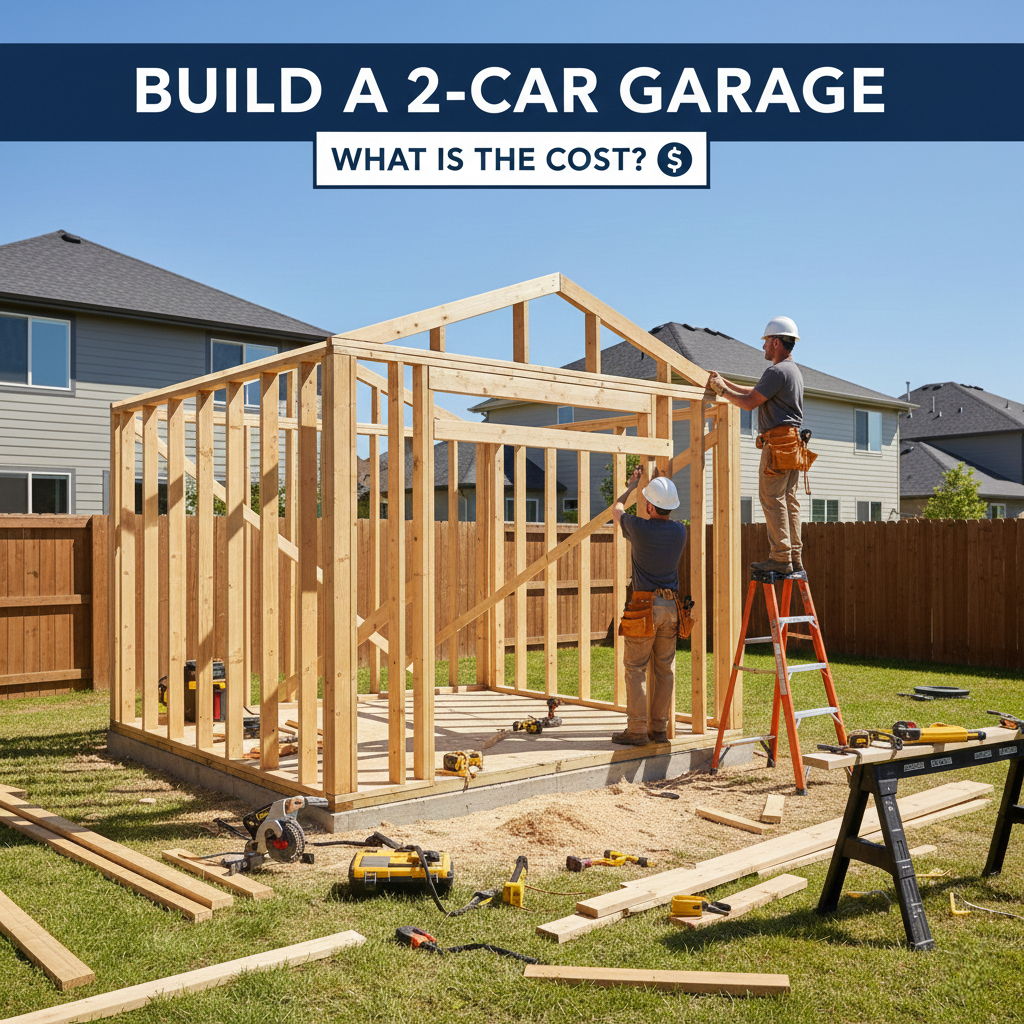
Building a 2-car garage costs $25,000 to $60,000 on average in 2026, according to HomeGuide’s 2026 cost data. A standard 2-car garage runs about 400 to 576 square feet (roughly 20×20 up to 24×24), and where you land in that range depends on size, whether it’s attached or detached, and your finish level.
This guide breaks the garage down the way an estimator does — by component — and flags the material-cost pressures that have pushed garage budgets up since 2020.
2-Car Garage Cost: Quick Numbers
| Garage Type / Size | 2026 Cost Range |
|---|---|
| 2-car garage (average, all-in) | $25,000 – $60,000 |
| 20×20 (400 sq ft) | ~$24,000 – $40,000 |
| 24×24 (576 sq ft) | ~$30,000 – $55,000 |
| Prefab 2-car unit (structure only) | $7,200 – $26,000 |
The all-in range and prefab figure come from HomeGuide (2026); the size-specific totals are typical finished builds within that band.
Component Cost Breakdown
A garage is really five systems — foundation, structure, envelope, roof, and the door package. Current per-unit rates:
| Component | 2026 Cost |
|---|---|
| Concrete slab foundation | $6 – $14 per sq ft |
| Wood framing (incl. roof trusses) | $11 – $30 per sq ft of wall |
| Concrete block walls (alternative) | $10 – $35 per sq ft of wall |
| Siding | $4 – $15 per sq ft |
| Roofing | $4 – $16+ per sq ft |
| Insulation | $1.00 – $4.50 per sq ft |
| Garage door (each) | $700 – $3,500 |
| Garage door opener | $300 – $900 |
All component rates above are from HomeGuide (2026). The slab and framing lines are where most of the budget goes, and both have climbed with material prices.
Attached vs. Detached: Which Costs More?
Attached garages generally cost less than detached ones. An attached garage shares a wall with the house, so it needs fewer exterior walls and ties into existing utilities more easily. A detached garage costs more because it requires four independent walls and, if you want power or plumbing, separate utility trenching to the structure. The trade-off is flexibility and placement — which is why detached builds remain popular despite the premium.
Why Garage Costs Are Up in 2026
Two of a garage’s biggest line items — the concrete slab and the framing package — are directly exposed to material inflation that hasn’t reversed. The BLS Producer Price Index for concrete products is up about 44% since 2019, and steel — relevant to garage doors, fasteners, and any rebar — has stayed elevated, with the rebar index up roughly 16.6% year over year under Section 232 tariffs. Framing lumber remains well above pre-pandemic levels. A garage quote built on 2020–2021 material pricing will understate a 2026 build.
How to Reduce the Cost
- Choose a standard rectangular footprint — complex shapes add framing and roofing labor.
- Attach to the house where feasible to save on walls and utility runs.
- Pick a prefab or kit structure if you don’t need a custom design.
- Skip or phase finishing (insulation, drywall, heating) if the garage is for storage and parking only.
- Get a detailed takeoff before pouring the slab — foundation rework is the most expensive change order.
Frequently Asked Questions
How much does it cost to build a 2-car garage in 2026?
About $25,000 to $60,000 on average per HomeGuide, for a structure of roughly 400 to 576 square feet (20×20 to 24×24). Finish level, attached vs. detached, and your local labor market set where you land in that range.
Is it cheaper to build an attached or detached garage?
Attached is usually cheaper — it shares a wall with the house and ties into existing utilities, so it needs fewer exterior walls. Detached costs more because it needs four independent walls and separate utility trenching for power or plumbing.
How much does the concrete slab for a garage cost?
About $6 to $14 per square foot, so roughly $2,400 to $8,000 for a 400–576 sq ft 2-car garage. Concrete-products prices are up about 44% since 2019, which has pushed slab costs higher.
Why has the cost to build a garage gone up?
Material inflation. Concrete-products producer prices are up about 44% since 2019, rebar and steel are up double digits under tariffs, and framing lumber remains above pre-2020 levels — none of which has reversed.