
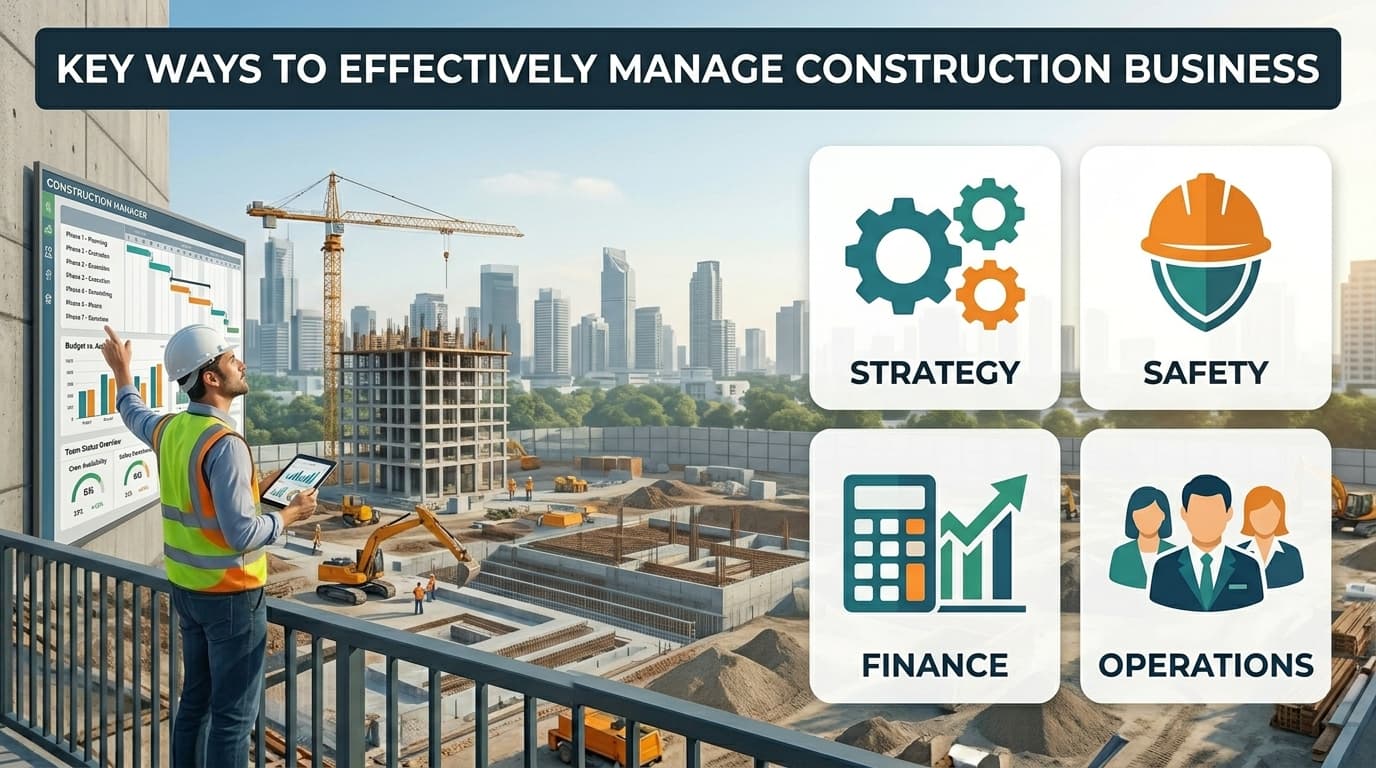
In the US, running a successful construction business takes more than just field experience. Construction company management needs to be strategic, data-driven, and operationally disciplined in light of rising material costs, labor shortages, complicated compliance regulations, and tighter profit margins.
Here are 30 concrete, actionable strategies to manage a construction company effectively in the US market, regardless of whether you work as a general contractor, subcontractor, or specialist trade firm.
Financial Management & Profit Control
1. Implement Job Costing at the Project Level
Every successful construction business keeps tabs on the expenses of labor, supplies, machinery, and subcontractor costs for every job. Early detection of profit leakage can be achieved by using cost codes that correspond with CSI divisions.
2. Monitor Work-in-Progress (WIP) Reports Weekly
WIP reporting safeguards cash flow and helps avoid overbilling or underbilling, which is important in US markets where retainage may lock up capital for months.
3. Tighten Change Order Documentation
One of the biggest factors that reduces margins is unapproved change orders. Prior to beginning work, use digital change order tracking with client sign-offs.
4. Control Overhead with Equipment Utilization Tracking
Profit is drained by idle equipment. To keep an eye on usage rates and cut down on unnecessary rentals, use telematics or fleet management software.
5. Build Cash Flow Forecasts for 6–12 Months
Billing cycles in construction projects are frequently irregular. To prevent dependency on high-interest credit lines, forecast inflows and outflows proactively.
Estimating & Preconstruction Excellence
6. Standardize Your Estimating Process
Labor productivity rates, material price databases, and consistent takeoffs are necessary for a scalable construction company management system.
7. Use Historical Cost Data for Competitive Bidding
Relying on outdated national averages leads to underbidding. For your local US market, keep data particular to your location/region.
8. Conduct Post-Bid Analysis
Keep an eye on bid-hit ratios and identify patterns. Are you losing out on relationships, pricing, or scope clarity?
9. Align Estimating with Field Teams
To eliminate scope gaps, project managers and estimators must collaboratively analyze handoff documentation.
10. Use Construction Estimating Software
Digital takeoff and estimation technologies improve speed and decrease human error, which is crucial in competitive US metropolitan markets.
Project Management & Execution
11. Develop Detailed Project Schedules (CPM-Based)
Scheduling using the Critical Path Method helps regulate subcontractor sequencing and guarantees accountability.
12. Hold Weekly Coordination Meetings
To address delays before they escalate, include key subcontractors, project managers, and site supervisors.
13. Track Labor Productivity Daily
Compare the actual and estimated labor hours. One of the main causes of construction companies losing margin is labor overruns.
14. Implement Digital Daily Reports
Cloud-based daily records increase transparency and provide documentation in the case of disputes.
15. Standardize Subcontractor Prequalification
Evaluate safety records, bonding capacity, insurance, and licensing, particularly important in litigious US markets. In the US market, one bad sub can cost you lawsuits and delays.
Compliance & Risk Management
16. Stay OSHA-Compliant
To reduce liability, make sure supervisors conduct routine safety audits and are OSHA 10/30 certified.
17. Maintain Proper Insurance Coverage
The scale and risk profile of your project must be reflected in general liability, builders’ risk, workers’ compensation, and umbrella policies.
18. Use Written Contracts for Every Project
Verbal agreements should never be relied upon. To reduce disagreements, use ConsensusDocs or AIA contracts.
19. Document Everything
Organized documentation, such as emails, RFIs, submittals, and inspection reports, protects your construction business legally.
20. Conduct Risk Assessments During Preconstruction
Early detection of weather-related hazards, supply chain vulnerabilities, and site risks is important.
Technology & Systems
21. Use Construction Management Software
Platforms like Procore, Buildertrend, or Autodesk Construction Cloud centralize project communication and documentation.
22. Implement Cloud-Based Accounting
Streamline payroll and invoicing by integrating accounting software with project management systems.
23. Automate Time Tracking
Digital timecards increase labor cost accuracy and decrease payroll errors.
24. Use Drones for Site Monitoring
Drone documentation enhances site visibility and improves stakeholder reporting.
Workforce & Leadership
25. Address Skilled Labor Shortages Strategically
Collaborate with apprenticeship programs and trade schools to build up long-term workforce pools.
26. Invest in Field Leadership Training
Profitability is directly impacted by superintendents and foremen. Train them about cost awareness, communication, and scheduling.
27. Create Performance Incentives
Incorporate bonuses to project profitability, safety metrics, and client satisfaction.
28. Improve Internal Communication
To avoid costly misunderstandings, field crew and office staff should use organized and structured reporting channels.
Client Relationships & Business Development
29. Focus on Repeat Business
Recurring customers are more profitable in the US construction industry than constantly hunting for new bids. Continue to follow up after the project.
30. Develop a Strong Online Presence
Digital visibility is an essential part of modern construction company management. Collect and display real client testimonials, highlight finished projects, and optimize your website.
Conclusion
Leading a construction company in today’s cutthroat US market requires more than just completing projects. Modern construction company management is characterized by proactive risk management, digital integration, structured estimating processes, and strong financial discipline.
The most successful construction companies function more as systems than as reactions. To safeguard margins and grow sustainably, they rely on real-time data, standardized procedures, and strategic planning.
It is now imperative to invest in smarter estimating and management systems if you want your construction business to expand its profitability, streamline operations, and maximize bidding accuracy.