
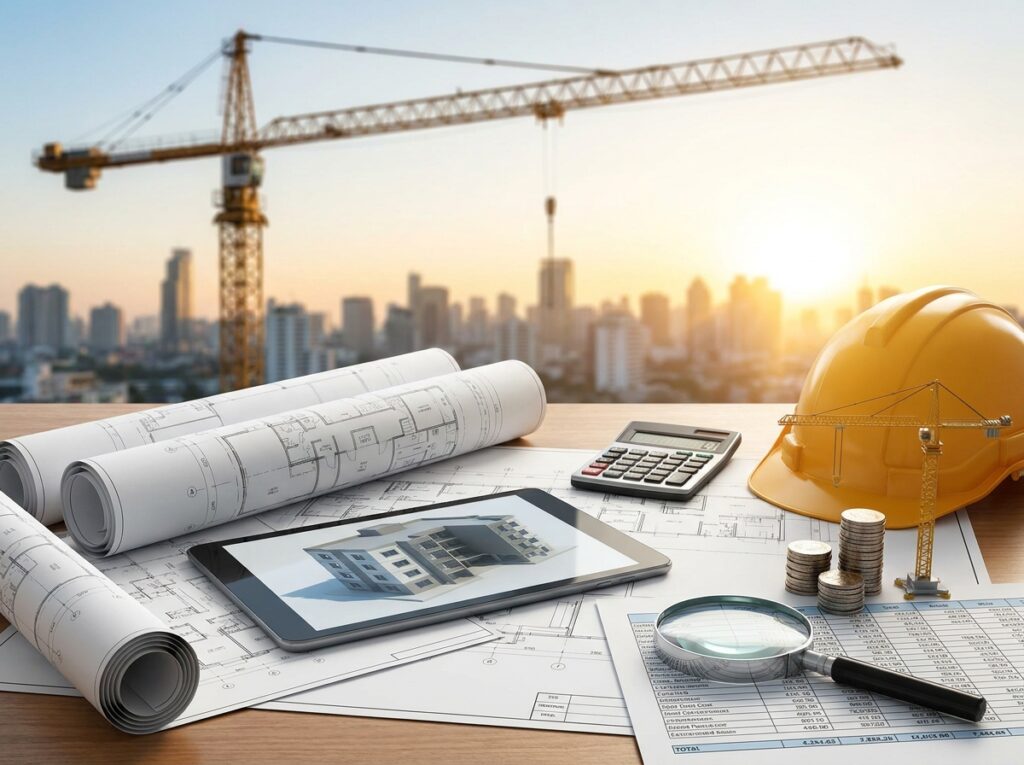
In today’s construction environment, preconstruction estimating is no longer optional—it’s essential. Whether you’re a contractor, developer, or project owner, understanding how to accurately forecast costs before breaking ground can make or break your project’s success.
At its core, preconstruction estimating is the process of analyzing project scope, design intent, and market conditions to develop reliable cost projections and timelines before construction begins. This includes everything from preconstruction cost estimation and material takeoffs to labor forecasting and procurement planning.
This guide will answer key questions like:
- What is preconstruction estimating?
- What is the preconstruction estimating process?
- How do professionals perform accurate preconstruction estimates?
From a U.S. construction estimating expert’s perspective, this article will walk you through how preconstruction estimating supports accurate project planning, improves budget control in construction, and reduces overall project risk.
What Is Preconstruction Estimating?
Definition and Core Purpose
Preconstruction estimating is more than just assigning a number to a project—it’s a strategic process that integrates cost forecasting, design evaluation, and construction planning. It allows stakeholders to make informed decisions before committing significant capital.
Unlike reactive cost tracking during construction, preconstruction estimating is proactive. It aligns closely with:
- Construction project management
- Project scope planning
- Construction procurement planning
The goal is to provide a realistic, data-backed projection of total project costs while identifying potential risks early.
Preconstruction Estimates vs Post-Construction Review
It’s important to distinguish between a preconstruction estimate vs post construction estimate.
- Preconstruction estimates guide decisions before building begins.
- Post-construction estimates (or actual costs) measure how accurate those projections were.
A strong preconstruction cost analysis helps prevent:
- Budget overruns
- Scope creep
- Poor procurement decisions
In short, preconstruction estimating sets the financial roadmap, while post-construction data validates performance.
Why Preconstruction Cost Estimation Matters
Accurate Project Planning and Budgeting
One of the biggest advantages of preconstruction cost estimation is enabling accurate project planning from the start. It provides clarity on:
- Total project budget
- Material and labor costs
- Timeline feasibility
This leads to stronger construction budget planning and improved cost control, reducing the likelihood of unexpected financial issues during construction.
Early Stage Cost Estimation for Design Decisions
Early-stage estimates allow designers and owners to explore multiple design scenarios without committing to costly changes later.
For example:
- Should you use steel framing or wood?
- Is increasing square footage financially viable?
- What material alternatives reduce cost without sacrificing quality?
This type of preconstruction cost analysis transforms estimating into a powerful decision-making tool.
Role in Bidding and Procurement
Preconstruction estimating plays a critical role in:
- Bidding phase estimating
- Design phase estimating
General contractors rely on these estimates to prepare competitive and realistic bids. Accurate estimates also improve procurement by aligning material purchases with project timelines and budgets.
Methods Used in Preconstruction Estimating
Quantity Takeoff and Unit Cost Estimating
A foundational method in preconstruction estimating is quantity takeoff, which involves measuring all materials required for a project.
This is paired with unit cost estimating, where costs are assigned per:
- Square foot
- Linear foot
- Unit or assembly
This method is especially effective for repeatable project types like multifamily housing or commercial buildings.
Cost Modeling and Historical Cost Data
Experienced estimators rely heavily on historical cost data and cost modeling. By analyzing past projects, they can predict future costs with greater accuracy.
Construction estimating firms often maintain databases that include:
- Labor productivity rates
- Material pricing trends
- Equipment costs
This allows for faster and more reliable estimates.
Labor, Material, and Equipment Cost Estimation
Accurate preconstruction estimating requires breaking down costs into three main categories:
- Labor cost estimation: Based on crew size, productivity, and local wages
- Material cost estimation: Includes purchase price, delivery, and storage
- Equipment cost estimating: Covers rentals, fuel, and operator costs
These components form the backbone of any professional construction estimate.
Steps in the Estimating Process
Project Scope and Timeline Estimation
Every estimate begins with defining the project scope. This includes:
- Drawings and specifications
- Project timeline
- Site conditions
Unclear scope leads to inaccurate estimates and increases the risk of scope creep.
Quantity Takeoff and Assembly Breakdown
Next, estimators perform detailed takeoffs and organize costs into assemblies such as:
- Foundations
- Structural systems
- Finishes
Modern tools like BIM and digital takeoff software significantly improve accuracy and efficiency.
Cost Assembling, Contingencies, and Overhead
Once base costs are calculated, estimators add:
- Overhead and profit margins
- Contingencies (typically 5–10%)
This creates a complete project cost estimate suitable for budgeting and decision-making.
Best Practices for Accurate Estimates
Use Historical Project Data and Market Benchmarks
Leveraging past project data and regional cost benchmarks improves accuracy and ensures estimates reflect real market conditions.
Involve Multidisciplinary Stakeholders
Successful preconstruction estimating requires collaboration between:
- Owners
- Architects
- Engineers
- Contractors
This alignment reduces misunderstandings and enhances project outcomes.
Document Assumptions and Update Estimates
Every estimate should include clearly documented assumptions. As designs evolve, estimates must be updated to reflect new information.
Challenges in Preconstruction Planning
Incomplete or Unclear Designs
Early-stage designs often lack detail, which can lead to inaccurate estimates. Phased estimating helps mitigate this issue.
Market Volatility and Labor Shortages
Fluctuating material prices and labor shortages can significantly impact cost projections. Estimators must stay updated on market trends.
Regulatory and Code Changes
Changes in building codes, permits, and regulations can increase costs and require re-estimation.
Preconstruction Estimating for Different Project Types
Commercial and Multifamily Projects
For large-scale projects, preconstruction estimating focuses on:
- Repeatable assemblies
- Cost per square foot
- Procurement efficiency
These projects benefit greatly from professional estimating services.
Residential and Renovation Work
In residential projects, preconstruction estimating helps homeowners:
- Stay within budget
- Reduce construction costs
- Avoid mid-project changes
Even smaller projects benefit from structured cost planning.
Outsource vs In-House Estimating
Professional Preconstruction Estimating Services
Many firms choose outsourced estimating services to access:
- Experienced estimators
- Advanced tools
- Up-to-date cost data
This is especially useful for complex or large-scale projects.
Benefits of Outsourced Construction Estimating
Outsourcing provides:
- Faster turnaround times
- Improved accuracy
- Better bid competitiveness
It also allows contractors to focus on execution rather than calculations.
Frequently Asked Questions (FAQs)
What is preconstruction estimating and how is it different from regular construction estimating?
Preconstruction estimating focuses on forecasting costs before construction begins, while regular estimating may occur during or after the project.
How does preconstruction cost estimation improve accurate project planning?
It provides early insights into costs, allowing stakeholders to make informed decisions and avoid budget overruns.
What is the preconstruction estimating process?
It includes scope definition, quantity takeoff, cost calculation, and applying contingencies and overhead.
How do contractors use accurate preconstruction estimates?
They use them for bidding, procurement planning, and project scheduling.
What is the difference between preconstruction estimate vs post construction estimate?
Preconstruction estimates predict costs, while post-construction estimates reflect actual expenses.
How do construction estimating services support cost planning?
They provide professional analysis, accurate takeoffs, and reliable cost projections.
How can teams reduce risk through preconstruction estimating?
By identifying cost risks early and adjusting scope or design before construction begins.
Get Expert Preconstruction Estimating for Your Project
Accurate preconstruction estimating is the foundation of every successful project—and having the right partner can make all the difference.
If you’re looking for accurate bid preparation, cost-effective project planning, and reliable construction insights, now is the time to take action.
Digital Estimating provides professional preconstruction estimating services tailored to contractors, developers, and project owners. Whether you need material takeoffs, cost analysis, or full project estimates, their team delivers precision and speed.
How to get started:
- Upload your project drawings and specifications
- Define your scope, timeline, and budget goals
- Receive a detailed, accurate estimate to guide your project
With Digital Estimating, you gain clarity, reduce risk, and improve your chances of winning bids and delivering profitable projects.
Conclusion: The Strategic Value of Preconstruction Estimating
In today’s competitive construction landscape, preconstruction estimating is not just a technical task—it’s a strategic advantage. It enables accurate project planning, strengthens budget control in construction, and minimizes costly surprises that can derail even the most well-planned projects.
By combining data-driven insights, stakeholder collaboration, and structured estimating processes, project teams can move forward with confidence—knowing their budgets are grounded in reality and aligned with market conditions.
Whether you’re a developer, contractor, or owner, investing in preconstruction estimating is one of the smartest decisions you can make to ensure your project is delivered on time, within budget, and with maximum profitability.
Ready to plan your project with confidence? Partner with Digital Estimating for precise preconstruction estimates, detailed material takeoffs, and reliable cost forecasting tailored to your project needs. With expert estimators and fast turnaround times, Digital Estimating helps you reduce risk, win more bids, and achieve accurate project planning from day one.