
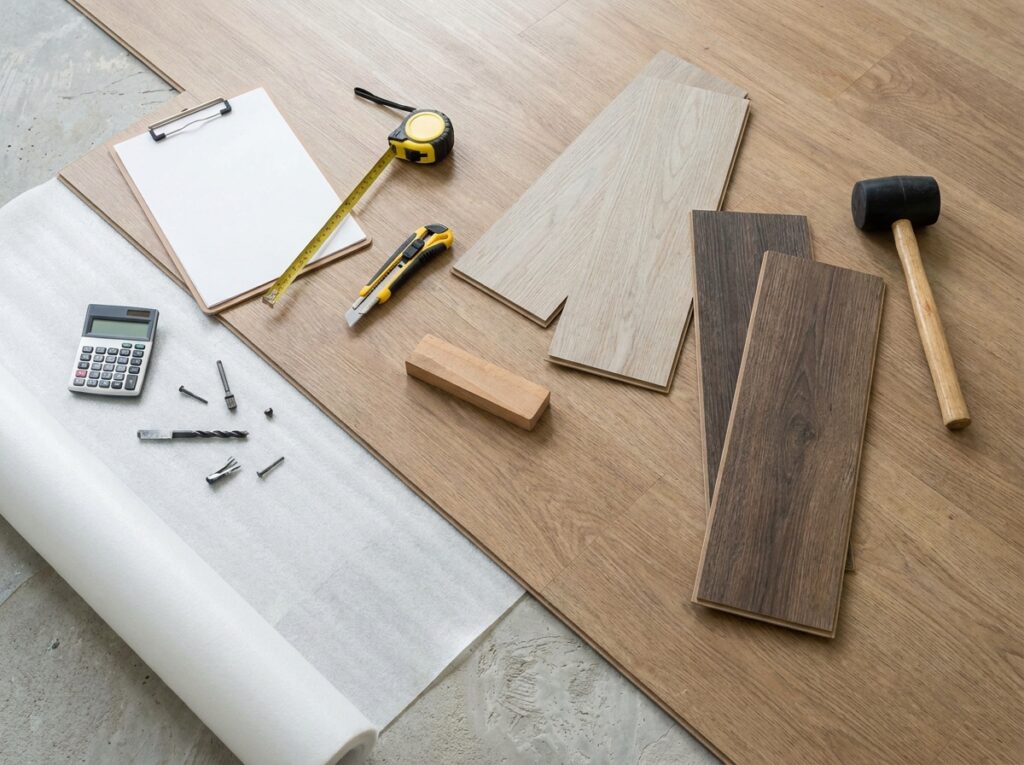
Luxury vinyl plank (LVP) flooring is one of the most popular alternatives to traditional hardwood because it combines a wood-look appearance with moisture resistance, relatively simple maintenance, and a lower installed cost. But the price you see on a flooring box is only one part of the total project budget.
In 2026, a typical LVP flooring installation costs about $4.50 to $12.00 per square foot installed, depending on the flooring quality, wear layer, installation method, subfloor condition, room layout, and local labor rates. Material alone commonly falls around $2.50 to $7.00 per square foot, while installation labor may add approximately $2.00 to $5.00 per square foot.
Additional expenses such as removing old flooring, repairing or leveling the subfloor, moisture testing, underlayment, trim, transitions, and disposal can increase the final cost.
This guide explains the major LVP flooring cost factors so homeowners, builders, flooring contractors, and remodelers can create a more realistic budget before purchasing materials or requesting installation.
Average LVP Flooring Cost in 2026
The following ranges provide a useful starting point for budgeting:
| Cost Component | Typical 2026 Cost per Sq. Ft. |
|---|---|
| LVP material | $2.50–$7.00 |
| Installation labor | $2.00–$5.00 |
| Subfloor preparation | $1.00–$3.00+ |
| Existing flooring removal | $0.50–$2.00 |
| Typical installed range | $4.50–$12.00+ |
A mid-range residential LVP installation may fall around $6 to $8.50 per square foot, while premium rigid-core products, difficult layouts, stairs, commercial applications, or extensive subfloor preparation can push costs beyond $12 per square foot.
These are budgeting ranges rather than guaranteed quotes. Local labor markets, supplier pricing, project specifications, and site conditions can substantially change the final number.
LVP Flooring Cost by Quality Level
The flooring product itself is one of the biggest contributors to the project budget. LVP is available in different thicknesses, wear layers, core constructions, textures, warranties, and installation systems.
Budget LVP: $2.50–$3.50 per Square Foot
Entry-level products are generally suitable for bedrooms, closets, rental properties, guest rooms, and other areas with relatively light traffic.
They can provide an attractive wood appearance at a low initial price, but cheaper products may have thinner wear layers and less robust locking systems.
Mid-Range LVP: $3.50–$6.00 per Square Foot
Mid-range LVP is often the best balance between price and performance for residential projects. These products typically offer improved surface protection, more realistic textures, stronger locking systems, and better long-term durability.
They are commonly used in kitchens, living rooms, hallways, bedrooms, and family spaces.
Premium Rigid-Core LVP: $6.00–$12.00+ per Square Foot
Premium flooring may feature SPC or WPC rigid cores, thicker wear layers, improved acoustic performance, enhanced textures, and longer warranties.
These products are particularly useful for high-traffic homes, commercial spaces, rental properties, and areas where durability is more important than achieving the lowest initial material price.
What Is the Wear Layer and Why Does It Matter?
The wear layer is the protective surface of vinyl flooring. It helps protect the printed design from scratching, scuffing, and everyday wear.
Common wear-layer levels include:
- 6–8 mil: Light residential use
- 12 mil: Standard residential applications
- 20 mil: Busy households, pets, children, and heavier traffic
- 20–30+ mil: Commercial or high-wear applications
A thicker wear layer usually increases material cost, but selecting the cheapest flooring is not always the most economical decision. Replacing a damaged floor prematurely can cost considerably more than choosing a suitable product from the beginning.
For contractors, the wear-layer specification should therefore be included in the estimate and material takeoff rather than treating all LVP products as interchangeable.
SPC vs. WPC Vinyl Flooring
Rigid-core vinyl flooring generally falls into two major categories: SPC and WPC.
SPC Flooring
SPC stands for Stone Plastic Composite, although manufacturers may use slightly different terminology for the core composition. SPC has a dense, rigid core that provides strong dimensional stability and resistance to indentation.
It is often selected for:
- High-traffic areas
- Commercial applications
- Homes with heavy furniture
- Areas exposed to temperature changes
- Projects where rigid-core performance is important
WPC Flooring
WPC stands for Wood Plastic Composite. Its core is generally lighter and more resilient than SPC, giving the flooring a somewhat softer feel underfoot.
WPC can be attractive for homeowners who prioritize comfort, sound reduction, and a warmer feel.
| Feature | SPC | WPC |
|---|---|---|
| Core | Dense rigid core | More cushioned rigid core |
| Feel | Firmer | Softer |
| Indentation resistance | Generally strong | Generally lower |
| Comfort | Firmer underfoot | More comfortable |
| Common use | High traffic/commercial | Residential |
| Cost | Often mid-to-premium | Often mid-to-premium |
The best choice depends on the project rather than simply selecting the more expensive product.
LVP Installation Labor Cost
Professional LVP installation typically costs approximately $2.00 to $5.00 per square foot, although stairs, complicated layouts, furniture movement, demolition, adhesive installation, and difficult site conditions can increase labor costs.
The installation price can include several separate activities:
- Floor preparation
- Layout and measurements
- Cutting and fitting
- Installation
- Door-jamb adjustments
- Transitions
- Trim installation
- Cleanup
- Material handling
A large, open room with a clean and level subfloor will generally be less expensive per square foot than a small house containing multiple rooms, closets, hallways, stairs, and irregular corners.
Floating vs. Glue-Down LVP
Installation method also affects labor and preparation requirements.
Click-Lock Floating LVP
Floating LVP uses interlocking planks that are installed over the prepared subfloor without permanently bonding the flooring to the surface.
Advantages include:
- Faster installation
- Lower labor requirements
- Easier replacement of individual planks
- Suitable for many residential applications
Glue-Down LVP
Glue-down LVP is adhered directly to the prepared subfloor.
It generally requires greater attention to:
- Subfloor cleanliness
- Flatness
- Adhesive selection
- Adhesive application
- Installation technique
Glue-down systems are frequently considered for commercial or high-traffic applications where greater stability is required.
Subfloor Preparation Can Change the Budget
One of the biggest mistakes in flooring budgeting is assuming that the existing floor is ready for installation.
Before installing LVP, the subfloor may need to be:
- Cleaned
- Patched
- Sanded
- Leveled
- Repaired
- Dried
- Tested for moisture
Minor preparation may have little effect on the budget, while extensive leveling or moisture mitigation can add several dollars per square foot.
Concrete slabs deserve particular attention because moisture migrating through the slab can create flooring problems if the selected product and installation system are not appropriate for the conditions.
This is why a professional estimate should distinguish between flooring material cost, installation cost, and preparation cost instead of presenting one unexplained square-foot price.
Additional Costs Often Missed in LVP Estimates
The flooring planks are not the only materials required.
Existing Flooring Removal
Removing carpet is generally simpler than demolishing tile, glued flooring, or other difficult materials. Disposal and hauling may also add costs.
Underlayment
Some LVP products have attached underlayment, while others require a separate product. Always follow the manufacturer’s installation requirements rather than automatically adding underlayment to every project.
Trim and Transitions
Baseboards, quarter-round, reducers, T-moldings, stair noses, and other transition components can add noticeable costs, especially in larger projects.
Moisture Testing and Mitigation
Concrete floors and moisture-prone locations may require testing and corrective measures before installation.
Door and Trim Adjustments
New flooring can change finished floor height. Doors, casings, and thresholds may therefore require adjustments.
LVP Flooring Cost by Room
Different rooms produce different installation costs because of layout and site conditions.
| Room | Approximate Installed Cost |
|---|---|
| Bedroom | $4.50–$7.00/sq. ft. |
| Living room | $4.50–$7.50/sq. ft. |
| Kitchen | $5.50–$9.00/sq. ft. |
| Bathroom | $6.00–$9.50/sq. ft. |
| Basement | $6.50–$10.00+ per sq. ft. |
| Stairs | $40–$100+ per step |
Bathrooms and kitchens typically require more detailed cutting around fixtures, cabinets, appliances, and plumbing penetrations. Basements can require additional moisture management and slab preparation.
Stairs are particularly labor-intensive because each tread and riser requires precise measurement and fitting.
How Much LVP Flooring Do You Need?
Accurate quantity calculation is essential before ordering materials.
Start by calculating:
Room Length × Room Width = Floor Area
For multiple rooms, calculate each area separately and then add the totals.
Next, include an appropriate waste allowance:
- 5–10% for straightforward layouts
- 10–15% for diagonal, herringbone, or complicated layouts
Waste is affected by room geometry, plank dimensions, pattern direction, openings, closets, and installation requirements.
For a 1,000-square-foot project using a 10% waste allowance:
1,000 × 1.10 = 1,100 square feet
That means approximately 1,100 square feet of flooring should be included in the material quantity before accounting for manufacturer-specific carton sizes.
Example LVP Flooring Budgets
Consider three simplified projects.
300-Square-Foot Kitchen
At an installed range of approximately $5.50–$9.00 per square foot:
300 × $5.50 = $1,650
300 × $9.00 = $2,700
The actual total may be higher if old flooring must be removed or the subfloor requires extensive preparation.
1,000-Square-Foot Home
At approximately $4.50–$12.00 per square foot:
Estimated installed range: $4,500–$12,000
Large projects may benefit from economies of scale, but multiple rooms, transitions, furniture movement, stairs, and preparation can increase labor.
1,500-Square-Foot Project
At the same broad range:
Estimated installed range: $6,750–$18,000
This demonstrates why using one universal “average price” can be misleading. The scope and specification must be evaluated before a reliable estimate is produced.
LVP vs. Hardwood Cost
LVP is generally less expensive to install than traditional hardwood, although premium LVP products can narrow the difference.
| Feature | LVP | Hardwood |
|---|---|---|
| Typical installed cost | $4.50–$12+ | Often higher |
| Moisture resistance | High | Generally lower |
| Maintenance | Relatively low | More maintenance |
| Appearance | Wood-look designs | Natural wood |
| Refinishing | Generally not refinished | Can often be refinished |
| Initial budget | Lower | Higher |
LVP can therefore be a practical choice when a project needs a wood appearance but has a tighter budget or greater exposure to moisture.
DIY vs. Professional LVP Installation
DIY installation can reduce labor expenses, particularly for small rooms with simple layouts and click-lock flooring.
However, homeowners should consider:
- Tool purchases or rentals
- Material waste
- Incorrect cuts
- Subfloor preparation
- Moisture testing
- Manufacturer installation requirements
- Warranty requirements
- Time required to complete the project
Professional installation becomes more valuable when the project involves stairs, multiple rooms, glue-down flooring, complicated layouts, commercial spaces, or significant subfloor repairs.
How Contractors Can Improve LVP Estimates
For flooring contractors and builders, accurate estimating starts before the material is ordered.
A professional flooring takeoff should identify:
- Floor areas by room
- Flooring type and specification
- Waste allowance
- Underlayment requirements
- Adhesive requirements
- Transitions and trims
- Baseboards or accessories
- Existing flooring removal
- Subfloor preparation
- Labor requirements
- Equipment and tools
- Delivery and material handling
- Applicable project conditions
Digital Estimating provides flooring estimating services that cover material quantities, labor, preparation, project complexity, and location-based pricing. The company also performs digital takeoffs for residential and commercial flooring projects using estimating technology and professional review.
This approach is particularly useful for contractors who need a reliable quantity takeoff before purchasing materials or submitting a bid.
Smart Ways to Reduce LVP Flooring Costs
You do not necessarily need to choose the cheapest flooring to control the budget.
Instead:
- Compare multiple material suppliers
- Purchase during seasonal promotions
- Select the appropriate wear layer
- Avoid unnecessary premium specifications
- Measure rooms accurately
- Control material waste
- Combine multiple rooms when practical
- Compare installation bids line by line
- Inspect the subfloor before ordering
- Confirm whether underlayment is already attached
- Verify transition and trim requirements
- Order enough material from the same product batch when possible
The goal is not simply to minimize the initial material price. It is to achieve the best combination of material performance, installation cost, durability, waste, and long-term value.
Why Professional Flooring Takeoffs Matter
A flooring project can appear simple because the primary measurement is square footage. In practice, accurate estimating requires more than multiplying length by width.
A proper takeoff must account for room-by-room quantities, waste, installation method, product specifications, subfloor conditions, accessories, labor productivity, and project-specific requirements.
Digital Estimating’s flooring services cover a broad range of flooring materials, including vinyl, LVT, VCT, wood, laminate, tile, carpet, rubber, and specialty flooring systems. Its estimating process considers project area, material quality, durability, installation requirements, labor, and preparation.
For contractors, this can turn an uncertain flooring bid into a documented cost breakdown that is easier to review, price, and manage.
Final Takeaway
The average LVP flooring cost in 2026 is approximately $4.50 to $12.00 per square foot installed, but the number should only be treated as a starting point.
Your actual cost depends on the flooring specification, wear layer, SPC or WPC core, installation method, labor market, room layout, subfloor condition, moisture requirements, existing flooring removal, waste, trim, transitions, and other project-specific details.
For homeowners, the best way to avoid budget surprises is to obtain a detailed quote that separates materials, labor, preparation, removal, and accessories.
For contractors, builders, and flooring professionals, the better approach is to complete a detailed flooring material takeoff and cost estimate before purchasing materials or submitting a bid. Accurate quantities and realistic labor pricing help reduce waste, improve bid confidence, and protect project margins.
If you need a detailed flooring estimate based on your drawings, specifications, quantities, and project location, Digital Estimating can help turn your plans into a clear, itemized cost breakdown.