
Roofing systems are an essential part of any building because they protect the structure from weather conditions, moisture, and environmental damage. Among the many roofing systems used in construction, the built up roof is one of the most traditional and reliable flat roofing systems. It has been widely used in commercial, industrial, and institutional buildings for more than a century.
Understanding what a built up roof is important for architects, engineers, contractors, and property owners who want a durable and weather-resistant roofing solution. This roofing method is known for its strength, waterproofing capability, and long service life. A built up roof is particularly suitable for buildings with flat or low-slope roofs where water resistance and durability are critical.
This article explains the concept of a built up roof, its structure, components, advantages, disadvantages, and its role in modern construction.
What Is a Built Up Roof?
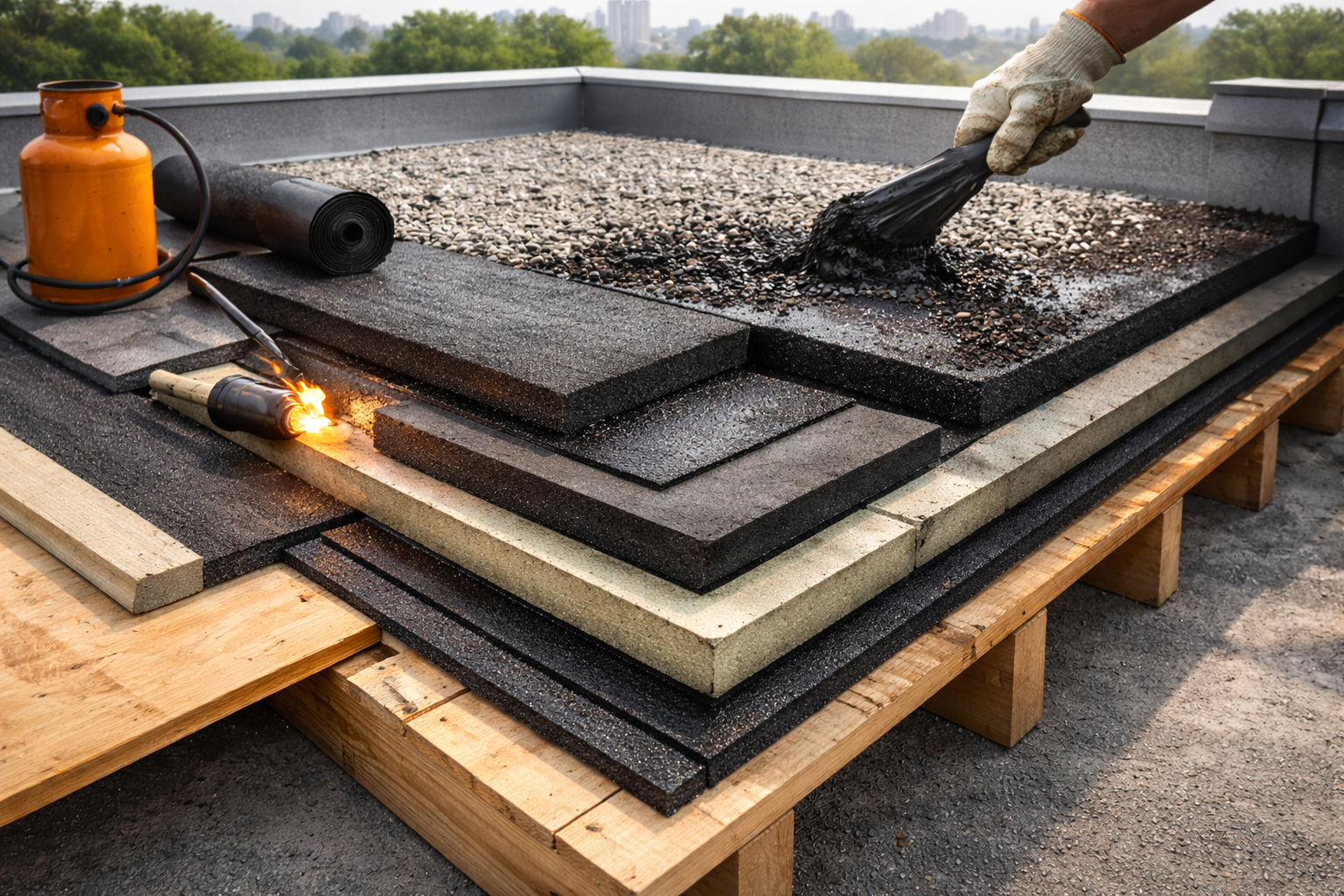
A built up roof (often abbreviated as BUR) is a roofing system made by layering multiple materials such as bitumen and reinforcing fabrics to create a strong and waterproof membrane. These layers are built up on the roof surface to form a thick protective barrier that protects the building from water penetration and weather damage.
The name “built up roof” comes from the process of installing several layers of materials on top of each other. Typically, alternating layers of bitumen (asphalt or coal tar) and reinforcing fabrics are applied to create a multi-layered roofing system.
In simple terms, what is a built up roof can be explained as a roofing system composed of several layers of waterproof materials that work together to create a durable and protective roof membrane.
Built up roofs are most commonly used on flat or low-slope roofs where traditional sloped roofing materials like shingles or tiles are not suitable.
Components of a Built Up Roof
A built up roof consists of several layers that work together to provide strength, insulation, and waterproofing. Each layer plays an important role in the overall performance of the roofing system.
Roof Deck
The roof deck is the structural base of the roofing system. It supports the entire roof assembly and transfers loads to the building structure. Roof decks are commonly made from concrete, metal, wood, or reinforced panels.
The roof deck must be strong enough to support the weight of the built up roof system and any additional loads such as maintenance equipment or environmental forces.
Vapor Barrier
A vapor barrier is sometimes installed above the roof deck to prevent moisture from entering the insulation layer. Moisture accumulation can damage insulation and reduce the effectiveness of the roofing system.
This layer is particularly important in buildings where interior humidity levels are high.
Insulation Layer
The insulation layer helps regulate the temperature inside the building and improves energy efficiency. Insulation materials used in built up roofs may include rigid foam boards, fiberglass, or mineral wool.
This layer reduces heat transfer between the interior and exterior of the building, helping maintain comfortable indoor temperatures.
Bitumen Layers
Bitumen is the waterproofing material used in a built up roof. It may consist of asphalt or coal tar, both of which provide excellent resistance to water and weather.
Bitumen layers are applied in hot or cold form and act as the adhesive that binds the reinforcing layers together.
Reinforcing Fabrics
Reinforcing fabrics, often called felts or plies, are placed between layers of bitumen to strengthen the roofing system. These fabrics are typically made from fiberglass or organic materials.
The combination of bitumen and reinforcing fabrics forms a durable membrane that protects the roof from water infiltration and environmental damage.
Surface Layer
The top layer of a built up roof is called the surface layer or protective layer. This layer often includes gravel, mineral granules, or reflective coatings.
The surface layer protects the roofing membrane from ultraviolet radiation, mechanical damage, and extreme temperature changes.
How a Built Up Roof Is Installed
The installation of a built up roof involves a layered process where materials are applied sequentially to create a strong and waterproof membrane.
The process usually begins with preparing the roof deck to ensure it is clean, dry, and structurally sound. After the deck is prepared, insulation and vapor barriers are installed if required.
Next, layers of bitumen and reinforcing fabrics are applied alternately. Each layer is carefully installed to ensure proper adhesion and waterproofing.
Finally, the surface layer is added to protect the roofing system from sunlight and weather exposure.
Because of the multiple layers involved, built up roofs are known for their thickness and durability.
Advantages of a Built Up Roof
The built up roof system offers several advantages that make it a popular choice for flat roof construction.
Excellent Waterproofing
One of the biggest advantages of a built up roof is its strong resistance to water penetration. The multiple layers of bitumen and reinforcing fabrics create a highly waterproof membrane.
Long Service Life
Built up roofs are known for their durability and can last between 20 and 30 years or more with proper maintenance.
Strong Weather Resistance
The layered construction provides excellent protection against wind, rain, and temperature fluctuations. The surface layer also protects the roof from ultraviolet radiation.
Good Fire Resistance
Many built up roofing systems provide good fire resistance, which improves the overall safety of the building.
Low Maintenance
Compared to some modern roofing systems, built up roofs require relatively minimal maintenance when properly installed.
Disadvantages of a Built Up Roof
Despite its advantages, the built up roof system also has some limitations.
Heavy Weight
Because it consists of multiple layers of materials, a built up roof can be heavier than other roofing systems. The building structure must be strong enough to support this weight.
Installation Complexity
Installing a built up roof requires specialized equipment and experienced contractors. The process can also take longer than installing some modern roofing systems.
Strong Odor During Installation
Traditional bitumen application methods may produce strong odors during installation, which can be unpleasant for building occupants.
Applications of Built Up Roof Systems
Built up roofs are commonly used in buildings that have flat or low-slope roofs.
Typical applications include:
- Commercial buildings
- Industrial facilities
- Warehouses
- Schools and universities
- Hospitals
- Government buildings
These types of buildings often require durable roofing systems that can withstand heavy use and environmental exposure.
Built Up Roof vs Modern Roofing Systems
Although newer roofing systems such as single-ply membranes and modified bitumen roofs have become popular, built up roofs remain widely used because of their proven durability and reliability.
Modern roofing systems may offer easier installation and lighter weight, but built up roofs provide strong waterproofing and long-term performance.
For many large commercial buildings, the built up roof continues to be a dependable roofing solution.
Conclusion
A built up roof is a traditional and highly durable roofing system created by layering bitumen and reinforcing fabrics to form a waterproof membrane. Understanding what is a built up roof helps construction professionals choose appropriate roofing systems for flat or low-slope buildings.
The multiple layers of a built up roof provide excellent waterproofing, weather resistance, and long service life, making it a popular choice for commercial and industrial structures. Although newer roofing technologies are available, built up roofs continue to be valued for their reliability and strong protective performance.
With proper installation and maintenance, a built up roof can provide decades of protection and contribute to the long-term durability of a building.