
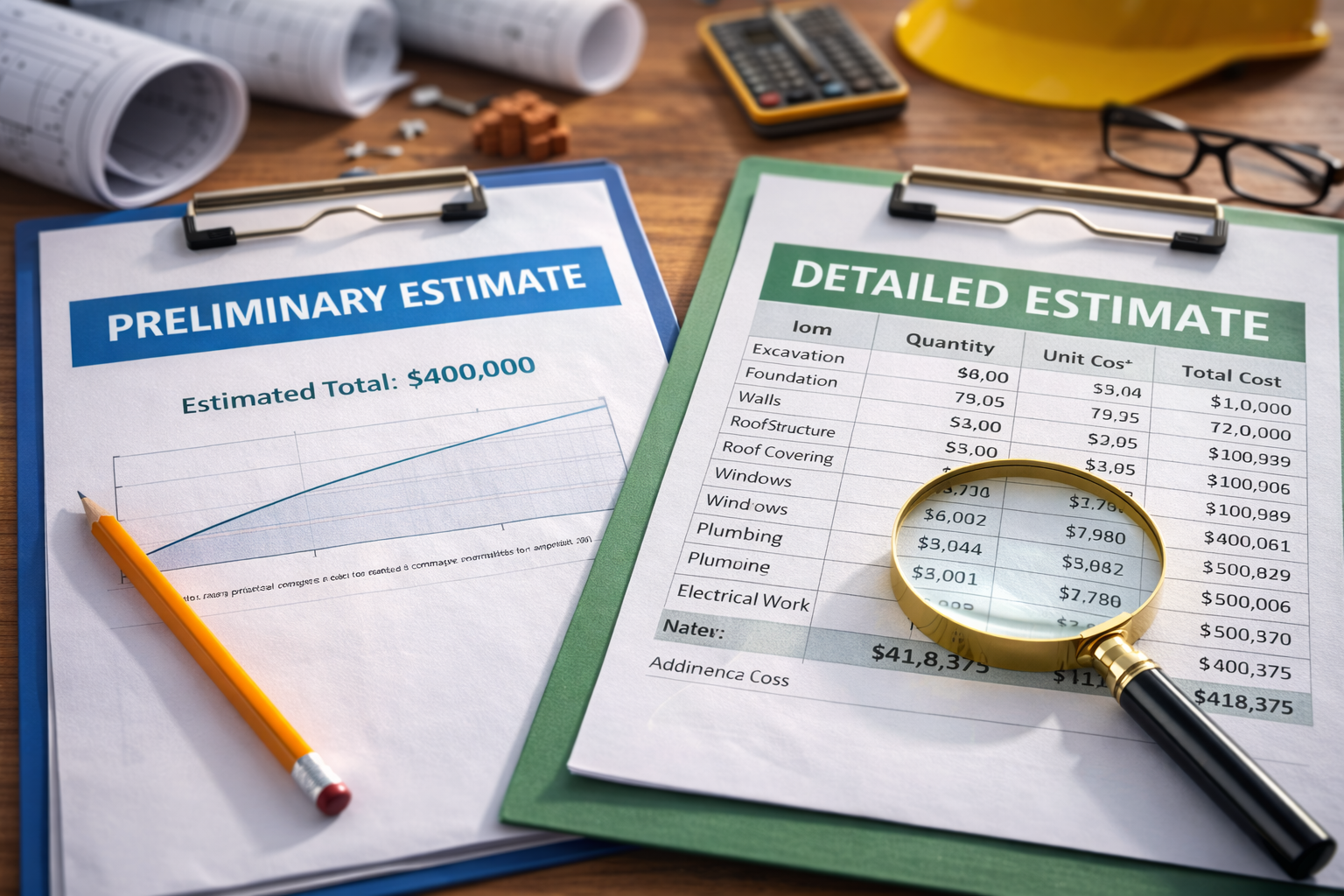
Cost estimation is one of the most important processes in construction project planning and management. Before any construction work begins, project owners, engineers, and contractors need to determine the expected cost of the project. Accurate cost estimation helps in budgeting, feasibility analysis, and financial decision-making. Two of the most commonly used methods in construction cost planning are the preliminary estimate and the detailed estimate.
Understanding what is a preliminary estimate and how it differs from a detailed estimate is essential for engineers, architects, and project managers. While both estimates aim to determine the project cost, they are prepared at different stages of the project and serve different purposes. This article explains the concept of a preliminary estimate, a preliminary quote, and a detailed estimate, as well as the major differences between them.
What Is a Preliminary Estimate?
A preliminary estimate is an approximate calculation of the cost of a construction project prepared during the early planning stage. It is usually developed before detailed drawings and specifications are available.
The purpose of a preliminary estimate is to give the client or project owner a general idea of how much the project may cost. Since it is prepared at an early stage, the estimate is based on limited information such as the type of structure, approximate size, location, and previous project data.
Because of this, a preliminary estimate does not provide an exact cost but rather a rough figure that helps determine whether the project is financially feasible.
Methods Used for Preliminary Estimates
Engineers and quantity surveyors often use simplified methods to prepare a preliminary estimate. Some common methods include:
- Unit Area Method
The cost is estimated based on the building area. For example, the cost per square meter is multiplied by the total floor area. - Unit Volume Method
The cost is calculated based on the volume of the building structure. - Approximate Quantity Method
Only major quantities such as walls, floors, and roofs are considered to estimate the cost. - Cost Comparison Method
Costs from similar previously completed projects are used to estimate the new project.
These methods help prepare a quick cost estimate without requiring detailed technical information.
What Is a Preliminary Quote?
A preliminary quote is a rough price estimate provided by a contractor or supplier before the final scope of work is fully defined. It is often based on the preliminary estimate and provides an approximate cost for materials, labor, and other project expenses.
A preliminary quote helps the client understand the expected financial commitment and allows contractors to communicate expected costs before preparing a detailed proposal. However, because it is based on limited information, the price in a preliminary quote may change when more detailed plans are available.
What Is a Detailed Estimate?
A detailed estimate is a comprehensive and accurate calculation of the total cost of a construction project. It is prepared after the project drawings, specifications, and design details are completed.
Unlike the preliminary estimate, a detailed estimate includes the exact quantities of all construction materials, labor costs, equipment costs, and other expenses. It is prepared using a document known as the Bill of Quantities (BOQ).
Each item of work is carefully measured and priced in the detailed estimate. These items may include:
- Excavation and earthwork
- Concrete work
- Brickwork and masonry
- Reinforcement steel
- Flooring and finishing works
- Plumbing installations
- Electrical systems
- Painting and decoration
Because every component of the project is measured and priced individually, the detailed estimate provides a much more accurate project cost.
Purpose of a Detailed Estimate
The detailed estimate serves several important purposes in construction management.
First, it provides an accurate calculation of the total project cost. This allows project owners to arrange financing and plan their budgets.
Second, it helps contractors prepare competitive tenders for construction projects. Contractors rely on detailed estimates to determine the cost of labor, materials, and equipment.
Third, the detailed estimate helps in cost control during the construction phase. Since each activity has a defined cost, project managers can track spending and identify any deviations from the budget.
Key Differences Between Preliminary Estimate and Detailed Estimate
Although both estimates are used to determine the cost of construction projects, there are significant differences between them.
Stage of Preparation
A preliminary estimate is prepared during the early planning stage when only basic information about the project is available. In contrast, a detailed estimate is prepared after the design and drawings are completed.
Level of Accuracy
The preliminary estimate provides only an approximate cost and may have a larger margin of error. The detailed estimate, however, is highly accurate because it is based on exact quantities and specifications.
Information Required
Preparing a preliminary estimate requires only basic project details such as the building area, type of structure, and general design concept. A detailed estimate requires complete project drawings, specifications, and detailed measurements.
Purpose
The preliminary estimate is mainly used to determine the feasibility of a project and obtain initial project approval. The detailed estimate is used for tendering, budgeting, and cost control during construction.
Time Required
A preliminary estimate can be prepared quickly because it uses simplified calculations. A detailed estimate requires more time and effort because each component of the project must be measured and priced.
Importance of Both Estimates in Construction Projects
Both preliminary and detailed estimates play essential roles in construction project planning. The preliminary estimate helps project owners decide whether the project is financially viable. It provides an early indication of costs and allows for adjustments in the project scope or design if necessary.
The detailed estimate, on the other hand, provides the precise financial framework required for executing the project. It ensures that all materials, labor, and resources are accounted for before construction begins.
Together, these estimates help ensure that construction projects are well planned, financially feasible, and properly managed.
Conclusion
Understanding the difference between a preliminary estimate and a detailed estimate is essential for effective construction cost planning. A preliminary estimate provides an early approximation of project costs and helps determine the feasibility of a project. It is often supported by a preliminary quote from contractors or suppliers.
In contrast, a detailed estimate provides a complete and accurate breakdown of all project costs based on detailed drawings and specifications. It is used for tendering, budgeting, and cost control during construction.
Both types of estimates are important tools in construction management. When used together, they help engineers, architects, and project managers plan projects more efficiently, control expenses, and ensure successful project completion.