
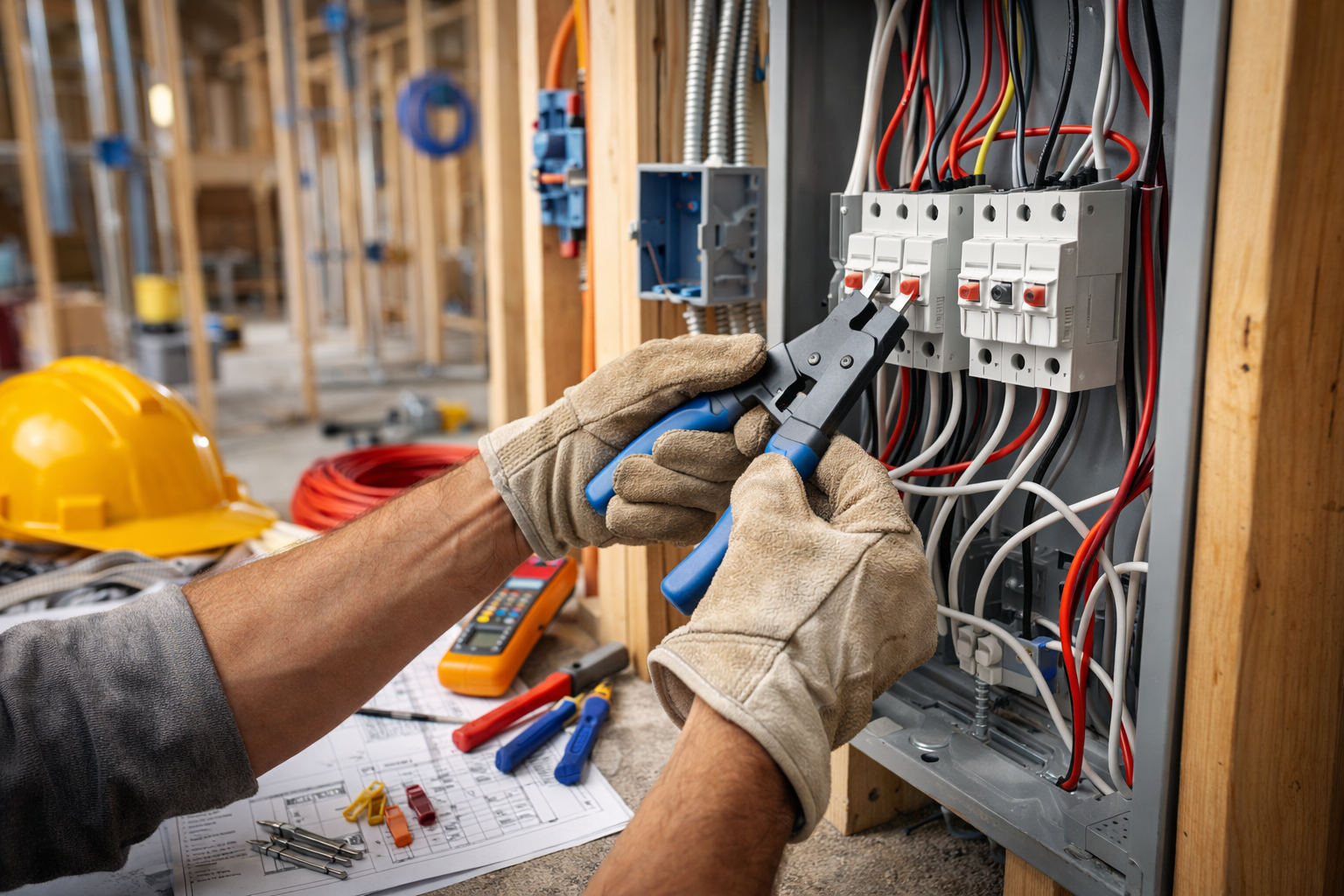
Electrical systems are a vital part of any building project. From powering lighting and appliances to supporting communication systems and safety equipment, electrical installations are essential for both residential and commercial construction. Because of the complexity involved, accurately estimating electrical work is crucial for project planning and budgeting.
Construction professionals and new construction electrical contractors rely on detailed electrical cost estimates to determine the total cost of installing electrical systems in a building. A proper estimate ensures that materials, labor, equipment, and other expenses are accounted for before work begins.
Understanding how to estimate electrical work helps contractors prepare competitive bids, manage resources efficiently, and ensure projects are completed within budget. This article explains the process of electrical estimation, the key components involved, and the factors that influence electrical project costs.
What Is Electrical Work Estimation?
Electrical work estimation is the process of calculating the expected cost of installing electrical systems in a building project. The estimate includes the cost of electrical materials, labor, equipment, permits, and overhead expenses.
The goal of electrical cost estimates is to determine how much it will cost to complete all electrical installations required in a project. These estimates are used by contractors, engineers, and project managers during the planning and bidding stages of construction.
Accurate electrical estimates help ensure that contractors can cover project costs while still making a profit, and they allow property owners to plan their budgets effectively.
Importance of Electrical Cost Estimates
Preparing accurate electrical estimates is essential for several reasons.
First, electrical cost estimates help contractors determine whether a project is financially feasible. Without a proper estimate, contractors may underestimate costs and face financial losses during construction.
Second, estimates help new construction electrical contractors prepare competitive bids when competing for construction projects. A well-prepared estimate increases the chances of winning contracts while ensuring that the project remains profitable.
Third, electrical estimates allow project managers to plan resource allocation. Knowing the expected costs of materials and labor helps ensure that the necessary resources are available at the right time.
Key Components of Electrical Cost Estimates
Electrical estimation involves several different cost components. Each component must be carefully calculated to ensure accuracy.
Electrical Materials
Electrical materials make up a large portion of the total project cost. These materials may include:
- Electrical wiring and cables
- Conduits and raceways
- Electrical panels and distribution boards
- Switches and outlets
- Circuit breakers and protective devices
- Lighting fixtures
- Transformers and control equipment
The quantity and quality of materials required depend on the building design and electrical load requirements.
Labor Costs
Labor costs include the wages paid to electricians, technicians, and electrical helpers who perform the installation work.
Labor costs depend on several factors, including:
- Skill level of workers
- Project complexity
- Local labor rates
- Project timeline
Accurate labor estimation is essential because electrical installations often require specialized expertise.
Equipment and Tools
Electrical projects may require specialized equipment such as cable pullers, drilling machines, testing devices, and lifting equipment.
These tools may be owned by the contractor or rented for the duration of the project. The cost of equipment usage should be included in the electrical estimate.
Permits and Inspection Fees
Many construction projects require electrical permits and inspections from local authorities. These regulatory requirements ensure that electrical installations meet safety standards and building codes.
Permit and inspection fees should always be included when preparing electrical cost estimates.
Overhead and Profit
Contractors must also include overhead expenses and profit margins in their estimates.
Overhead costs may include:
- Office expenses
- Administrative staff salaries
- Insurance costs
- Transportation and logistics
Including a reasonable profit margin ensures that the contractor can sustain business operations.
Steps to Estimate Electrical Work
Estimating electrical work requires a systematic approach. The following steps are commonly used by new construction electrical contractors when preparing project estimates.
Review Construction Drawings and Specifications
The first step in electrical estimation is carefully reviewing the construction drawings and project specifications. Electrical drawings provide detailed information about the location of wiring systems, lighting fixtures, power outlets, and electrical equipment.
By analyzing these drawings, contractors can determine the scope of electrical work required for the project.
Perform Quantity Takeoff
Quantity takeoff is the process of measuring and listing all electrical materials required for the project. This includes calculating the length of wires and conduits, the number of outlets and switches, and the quantity of electrical panels and fixtures.
Accurate quantity takeoff ensures that all required materials are included in the estimate.
Calculate Material Costs
After determining the quantities of materials needed, contractors must determine the cost of each material.
Material prices may vary depending on suppliers, location, and market conditions. Contractors often obtain quotes from suppliers to ensure accurate pricing.
Estimate Labor Requirements
Labor estimation involves determining how many workers are needed and how long it will take to complete the electrical installation.
Contractors use labor productivity rates to estimate the time required for specific tasks such as installing conduits, pulling wires, or mounting electrical panels.
Add Equipment and Additional Costs
Next, contractors include equipment costs, permit fees, inspection charges, and other project-related expenses.
Including all additional costs ensures that the final estimate reflects the true cost of completing the electrical work.
Prepare the Final Estimate
The final step is combining all cost components into a comprehensive estimate. This includes material costs, labor costs, equipment expenses, permits, overhead, and profit margins.
The completed estimate provides a clear breakdown of the total electrical installation cost.
Factors That Affect Electrical Cost Estimates
Several factors influence the final cost of electrical work in construction projects.
Building Size
Larger buildings require more wiring, electrical panels, lighting fixtures, and power outlets, which increases the overall cost.
Complexity of Electrical Systems
Buildings with advanced electrical systems such as automation, security systems, or specialized equipment may require more complex installations.
Material Quality
The choice of electrical materials affects the overall project cost. High-quality cables, fixtures, and panels generally cost more but offer better performance and durability.
Project Location
Location affects both labor costs and material prices. Urban areas typically have higher construction costs compared to rural areas.
Construction Timeline
Projects with tight deadlines may require additional labor or overtime work, which can increase electrical installation costs.
Role of New Construction Electrical Contractors
New construction electrical contractors play a critical role in the electrical estimation process. These professionals specialize in designing and installing electrical systems for newly built structures.
Their responsibilities include:
- Preparing electrical cost estimates
- Planning electrical system layouts
- Coordinating with architects and engineers
- Ensuring compliance with electrical codes and regulations
- Managing electrical installation during construction
Experienced contractors use industry knowledge and cost databases to produce accurate electrical estimates.
Tips for Accurate Electrical Cost Estimation
To improve the accuracy of electrical cost estimates, contractors should follow several best practices.
First, always review project drawings carefully to understand the scope of electrical work. Even small details can affect the total cost.
Second, use updated material pricing from reliable suppliers to avoid outdated cost estimates.
Third, include contingency allowances to account for unexpected expenses or design changes.
Finally, maintain detailed records of previous projects to improve future estimating accuracy.
Conclusion
Estimating electrical work is a critical part of construction planning that ensures electrical systems are installed efficiently and within budget. Accurate electrical cost estimates allow contractors and project managers to plan resources, manage expenses, and deliver successful projects.
By analyzing project drawings, performing quantity takeoffs, calculating material and labor costs, and accounting for overhead expenses, new construction electrical contractors can prepare reliable estimates for electrical installations.
A well-prepared electrical estimate not only improves project budgeting but also helps ensure safe and efficient electrical systems in modern buildings.