
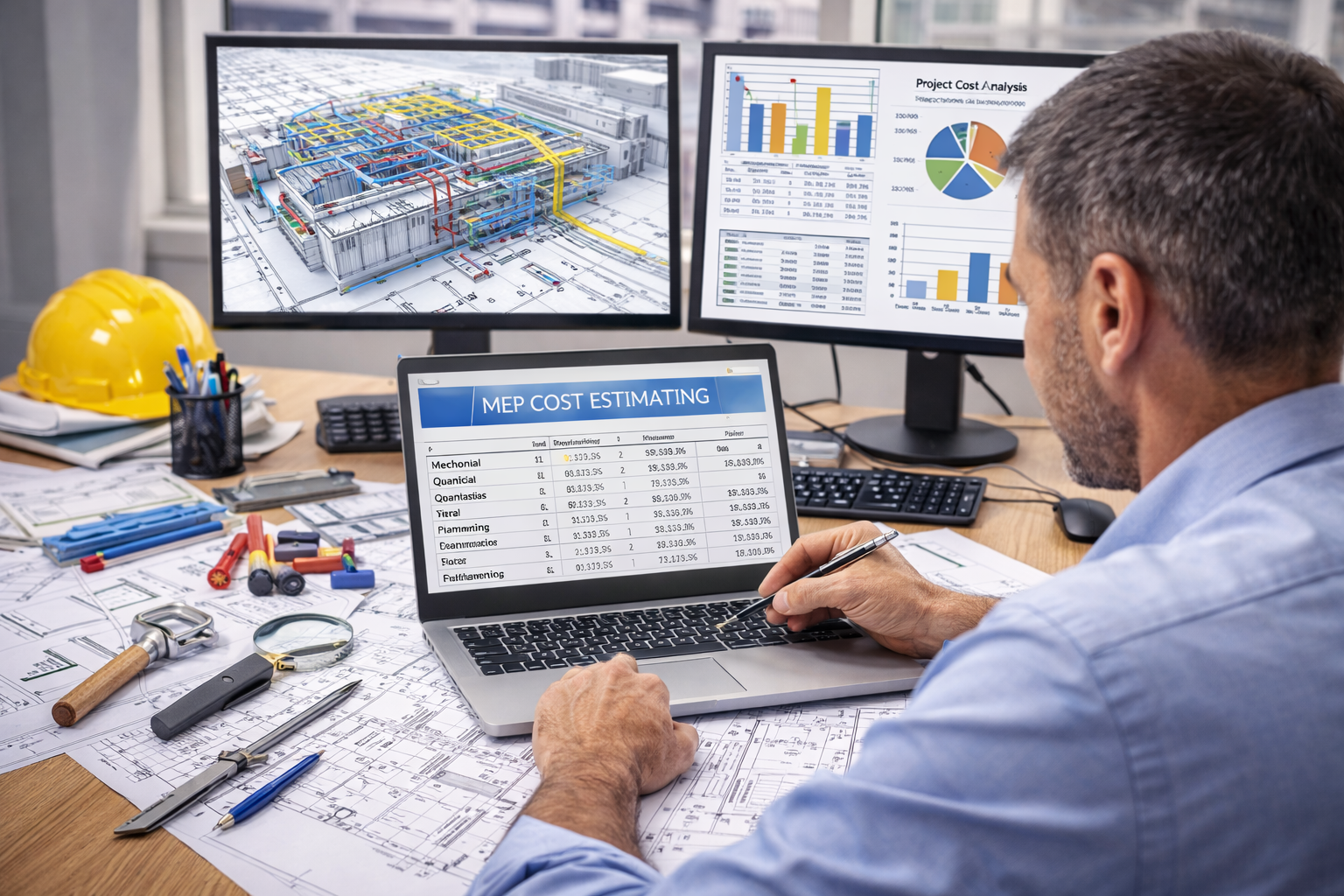
Modern construction projects involve complex building systems that go far beyond basic structural work. Mechanical, Electrical, and Plumbing systems—commonly referred to as MEP systems—are essential for ensuring that buildings function efficiently and safely. Because these systems represent a significant portion of the total construction cost, accurate planning and budgeting are crucial. This is where MEP estimating becomes an essential part of the construction process.
An MEP cost estimator plays a critical role in determining the expected cost of mechanical, electrical, and plumbing installations in construction projects. These professionals analyze project designs, calculate material and labor costs, and prepare detailed estimates that help contractors, developers, and project managers manage budgets effectively.
Understanding what an MEP cost estimator does and how MEP estimating works can help construction professionals appreciate the importance of accurate cost planning in building projects.
What Is MEP Estimating?
MEP estimating is the process of calculating the expected costs associated with mechanical, electrical, and plumbing systems in a construction project. These systems include heating and cooling systems, electrical wiring and lighting, water supply systems, drainage systems, and fire protection installations.
The goal of MEP estimating is to determine how much it will cost to design, supply, and install these systems before construction begins. Since MEP systems often represent a large percentage of the total construction budget, accurate estimating is essential for financial planning and project feasibility.
MEP estimates help contractors prepare competitive bids, ensure that projects stay within budget, and allow project owners to plan their investments effectively.
Who Is an MEP Cost Estimator?
An MEP cost estimator is a construction professional responsible for calculating the cost of mechanical, electrical, and plumbing systems in building projects. These estimators analyze technical drawings, specifications, and project requirements to prepare accurate cost estimates for MEP installations.
MEP cost estimators work closely with engineers, architects, contractors, and project managers to ensure that building systems are designed and installed within the available budget.
Their work involves both technical knowledge and financial analysis. They must understand building systems as well as the cost of materials, labor, equipment, and installation processes.
Key Responsibilities of an MEP Cost Estimator
An MEP cost estimator performs several important tasks throughout the construction planning process.
Reviewing Construction Drawings and Specifications
One of the first responsibilities of an MEP cost estimator is reviewing project drawings and technical specifications. These documents provide detailed information about the mechanical, electrical, and plumbing systems required in the building.
By analyzing these documents, the estimator can understand the scope of work and identify all necessary components for the project.
Performing Quantity Takeoffs
Quantity takeoff is the process of measuring and calculating the quantities of materials required for installation.
For MEP systems, this may include:
- Length of electrical cables and conduits
- Number of lighting fixtures and switches
- Quantity of pipes and fittings
- HVAC equipment and ductwork
- Pumps, valves, and plumbing fixtures
Accurate quantity takeoffs are essential for preparing reliable MEP estimating calculations.
Calculating Material Costs
After determining the quantities of materials required, the estimator calculates the cost of these materials. Material prices may vary depending on suppliers, market conditions, and project location.
The estimator must ensure that the prices used in the estimate reflect current market rates to avoid budget discrepancies.
Estimating Labor Costs
Labor costs represent a significant portion of MEP installation expenses. Estimators must determine how many workers will be required and how long each task will take.
Labor estimation involves analyzing installation procedures and applying productivity rates for different types of work.
Preparing Detailed Cost Estimates
Once material and labor costs are calculated, the MEP cost estimator prepares a detailed cost estimate that includes all project expenses. This estimate may include:
- Material costs
- Labor costs
- Equipment and machinery costs
- Transportation expenses
- Permits and regulatory fees
- Contractor overhead and profit
These estimates are often presented in detailed reports that provide a clear breakdown of costs for each system.
Types of MEP Systems Estimated
MEP cost estimators work with three major building systems.
Mechanical Systems
Mechanical systems include heating, ventilation, and air conditioning (HVAC) installations. These systems regulate indoor temperature, air quality, and ventilation.
Mechanical estimating involves calculating costs for equipment such as chillers, boilers, ductwork, ventilation systems, and insulation materials.
Electrical Systems
Electrical systems provide power and lighting throughout the building. Electrical estimating includes the cost of wiring, conduits, lighting fixtures, switchboards, transformers, and electrical panels.
Electrical installations must comply with strict safety regulations and electrical codes.
Plumbing Systems
Plumbing systems manage water supply, drainage, and sanitation within a building.
Plumbing estimates include the cost of pipes, valves, pumps, water heaters, sanitary fixtures, and drainage systems.
Importance of MEP Estimating in Construction Projects
Accurate MEP estimating is essential for successful construction project management.
Budget Planning
MEP systems often represent a large percentage of the total building cost. Accurate estimates help ensure that these systems fit within the project budget.
Competitive Bidding
Contractors rely on MEP estimates when preparing bids for construction projects. A well-prepared estimate allows contractors to submit competitive proposals without risking financial losses.
Resource Planning
MEP estimates help project managers determine the materials, labor, and equipment required for installation. This improves project scheduling and resource allocation.
Cost Control
By establishing clear cost expectations early in the project, MEP estimates help prevent unexpected expenses during construction.
Skills Required for MEP Cost Estimators
Successful MEP cost estimators require a combination of technical and analytical skills.
Technical Knowledge
Estimators must understand mechanical, electrical, and plumbing systems as well as installation methods and construction standards.
Analytical Skills
They must analyze large amounts of technical data and convert it into accurate cost estimates.
Knowledge of Construction Materials
Understanding the properties and costs of construction materials is essential for reliable estimating.
Attention to Detail
Small errors in estimation can lead to significant financial consequences, so estimators must be highly detail-oriented.
Software Proficiency
Many estimators use specialized construction estimating software and digital takeoff tools to improve accuracy and efficiency.
Tools Used in MEP Estimating
Modern MEP estimating often relies on digital tools and software to streamline the estimation process.
Common tools include:
- Construction estimating software
- Digital takeoff software
- Building Information Modeling (BIM) tools
- Spreadsheet analysis programs
These tools help estimators perform complex calculations and manage large amounts of project data more efficiently.
Challenges in MEP Estimating
Although MEP estimating is essential for project planning, it also involves several challenges.
Material prices can fluctuate due to market conditions, making it difficult to predict future costs accurately. Design changes during construction may also affect the scope of work and increase costs.
In addition, complex building systems require careful coordination between engineers, contractors, and estimators to avoid errors.
Despite these challenges, experienced MEP cost estimators use industry knowledge and advanced tools to produce reliable estimates.
Conclusion
An MEP cost estimator plays a crucial role in construction project planning by calculating the cost of mechanical, electrical, and plumbing systems. Through detailed analysis of project drawings, material quantities, and labor requirements, these professionals ensure that building systems are installed efficiently and within budget.
Effective MEP estimating supports budget planning, competitive bidding, and cost control throughout the construction process. As modern buildings become more complex and technology-driven, the role of MEP cost estimators continues to grow in importance.
By combining technical expertise with financial analysis, MEP estimators help ensure that construction projects are completed successfully while maintaining high standards of safety, functionality, and efficiency.