
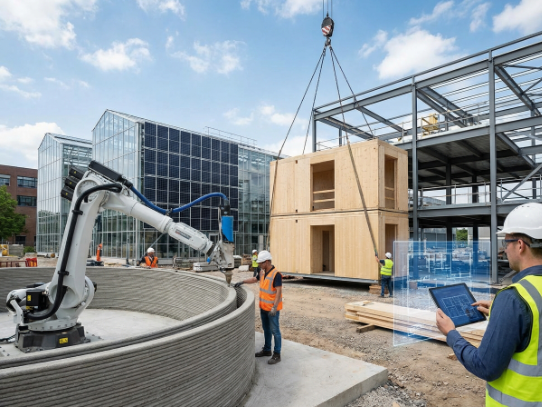
The construction industry in the United States is evolving rapidly. Traditional building techniques are being redefined in response to growing expenses, labor shortages, deadline pressure, and growing sustainability demands. Modern methods of building construction are changing how projects are planned, overseen, and carried out nationwide.
Modern construction techniques are assisting contractors in completing projects more quickly, effectively, and precisely, from tech-enabled infrastructure projects to modular homes in metropolitan areas. This change is becoming the new norm in the American construction industry, not simply a trend.
What Are Modern Methods of Building Construction?
Innovative techniques that outperform traditional methods in terms of sustainability, quality, and efficiency are referred to as modern building construction methods. These construction techniques frequently include off-site fabrication, technology, and more intelligent project planning.
Common characteristics include:
- Prefabrication and modular assembly
- Digital tools like Building Information Modeling (BIM)
- Automation and robotics
- Sustainable materials and processes
To solve industry-wide issues, these techniques are being used more and more in residential, commercial, and industrial projects in the United States.
Why the U.S. Construction Industry Is Embracing Modern Techniques
1. Skilled Labor Shortage
There is still a skilled labor shortage in the U.S. construction industry. By moving jobs to regulated settings like factories, modern construction techniques lessen reliance on on-site workers.
2. Rising Material and Labor Costs
Costs for materials like steel, timber, and concrete fluctuate frequently. Efficient construction techniques help optimize usage and minimize waste.
3. Demand for Faster Delivery
Investors and developers expect faster turnaround times. Parallel workflows are made possible by modern techniques, which shorten project completion times.
4. Sustainability Requirements
The use of ecologically friendly construction techniques is being propelled by energy efficiency objectives and green building standards.
Key Modern Methods of Building Construction
1. Prefabrication and Modular Construction
One of the most popular modern methods of building construction in the United States is prefabrication. Building components are manufactured off-site and assembled on-site.
Benefits:
- Quicker project completion
- Improved quality assurance
- Reduced site disruption
- Reduced labor expenses
Real-World Example:
Modular construction, in which whole units are manufactured in factories and assembled on-site, has been utilized for multi-family residential complexes in New York City. In heavily crowded metropolitan regions, this method drastically shortens construction timelines.
2. Building Information Modeling (BIM)
BIM is a digital approach that improves construction project coordination and planning. Before construction begins, it allows teams to produce intricate 3D models.
Benefits:
- Enhanced precision and visualization
- Early identification of design conflicts
- Improved cooperation between stakeholders
- Decreased delays and rework
Real-World Example:
In California, large-scale infrastructure projects like commercial buildings and transportation systems depend on BIM to facilitate communication between contractors, engineers, and architects and ensure more seamless execution.
3. 3D Printing in Construction
One new development in modern methods of building construction is 3D printing. It entails layer-by-layer construction of building components or whole buildings utilizing specialized equipment.
Benefits:
- Decreased wasting of materials
- Quicker construction schedules
- Reduced labor needs
Real-World Example:
To address the lack of affordable housing in Texas, companies have developed 3D-printed homes. Compared to traditional methods, these homes can be built in a fraction of time.
4. Advanced Steel Construction Techniques
Although steel is still a vital component of the U.S. construction industry, its use has been improved by modern techniques.
Innovations:
- Steel structures that are pre-engineered
- Automated manufacturing procedures
- Lightweight, strong steel
Benefits:
- Faster assembly
- Greater structural durability
- Cost efficiency
Real-World Example:
Chicago’s high-rise skyscrapers employ advanced steel framing systems that enable faster construction while upholding safety regulations and structural integrity.
5. Sustainable and Green Construction
A key element of modern construction techniques is sustainability. In order to comply with environmental standards and save operating costs, builders are progressively implementing eco-friendly methods.
Characteristics:
- Materials that use less energy
- Integration of renewable energy sources, such as solar panels
- Systems for conserving water
Benefits:
- Lower energy consumption
- Reduced environmental impact
- Compliance with certifications like LEED
Real-World Example:
In order to meet sustainability objectives and save long-term running costs, corporate office buildings in California are implementing green construction practices.
6. Tilt-Up Construction
In the United States, tilt-up construction is a popular technique for commercial and industrial structures. Concrete panels are cast on site and then lifted into position.
Benefits:
- Quicker construction schedules
- economical for large structures
- Sturdy and low-maintenance
Real-World Example:
Because of its effectiveness and adaptability, tilt-up architecture is widely used in warehouses and distribution facilities throughout logistics hubs in states like Texas and Nevada.
7. Automation and Robotics
In modern construction, automation is becoming more and more important. Robots are being employed for labor-intensive and repetitive jobs.
Applications:
- Robots that lay bricks
- Automated installation of concrete
- Site assessments using drones
Benefits:
- Enhanced productivity
- Increased safety
- Reduced human error
Benefits of Modern Construction Techniques
Adopting modern methods of building construction offers several advantages:
Faster Project Delivery
Construction timeframes are shortened by streamlined procedures.
Cost Efficiency
Costs for labor and materials are reduced via efficient utilization of resources.
Improved Quality
Consistent standards are guaranteed in factory-controlled settings.
Enhanced Safety
Risks and accidents are reduced when there is less work done on-site.
Sustainability
Long-term objectives are supported by eco-friendly practices.
Challenges in Adopting Modern Methods
While the benefits are clear, there are challenges to consider:
Initial Investment
Advanced technologies and equipment require upfront costs.
Training Requirements
Teams need to learn new tools and processes.
Industry Resistance
Some stakeholders are slow to move away from traditional methods.
Despite these challenges, the long-term benefits often outweigh the initial hurdles.
The Future of Construction in the U.S.
Innovation is the key to the U.S. construction industry’s future. Modern methods of building construction will become even more ingrained into everyday practices as technology evolves.
Emerging trends include:
- AI-powered project administration
- Smart structures with integrated systems
- Prefabrication and modular construction are being used more often.
- Increased use of eco-friendly materials
Adopting these construction techniques will put contractors in a stronger position to compete in a market that is becoming more and more competitive.
How Digital Estimating Supports Modern Construction
We at Digital Estimating are aware of challenges and complexities in modern construction projects. Our services are designed to assist developers and contractors who use cutting-edge building methods.
We offer:
- Precise cost estimates for modern construction methods
- Comprehensive material takeoffs
- Planning a budget for innovative projects
- Quick turnaround times for competitive bidding
No matter how advanced the construction technique, our experience guarantees that your projects stay well-planned and affordable.
Final Thoughts
The U.S. construction industry is evolving as a result of the transition to modern methods of building construction. Builders can increase productivity, cut expenses, and satisfy changing market demands by implementing cutting-edge building practices.
From modular construction to automation, these advancements are not just improving how buildings are constructed; they are redefining what’s possible.
Are you looking to estimate costs for modern construction projects?
Get professional assistance tailored to modern construction techniques by visiting digitalEstimating.com.