
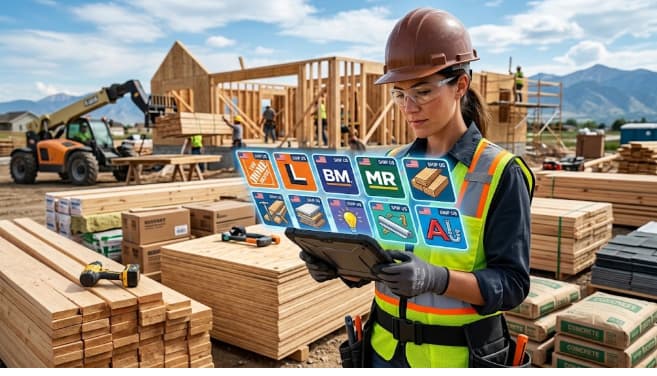
Buying construction materials online has become an important part of modern construction procurement. Contractors, builders, remodelers, developers, and homeowners can now compare products, check availability, review specifications, request delivery, and place orders without visiting multiple stores.
However, buying construction materials online is different from ordering ordinary consumer products. Lumber, drywall, concrete products, rebar, roofing materials, fasteners, plumbing components, electrical supplies, and other building products can be heavy, bulky, specification-sensitive, or difficult to return. Delivery costs, lead times, minimum order quantities, local availability, and material certifications can directly affect a project’s budget and schedule.
The right online building material supplier can help contractors save time, compare prices, locate specialty products, and coordinate deliveries. The wrong supplier can create expensive delays, incorrect material substitutions, or unexpected freight charges.
This guide covers 10 online sources for building materials in the US, what each supplier is best suited for, and what contractors should consider before placing an order.
Why Contractors Buy Building Materials Online
Online construction material purchasing has several advantages over relying exclusively on local suppliers.
Easier Price Comparison
Contractors can compare prices from multiple construction material suppliers before committing to a large purchase. This is particularly useful for materials such as lumber, flooring, roofing products, hardware, fixtures, and finishing materials.
Job-Site Delivery
Many suppliers offer delivery or pickup options, allowing contractors to reduce unnecessary trips and keep crews focused on construction rather than material runs.
Greater Product Selection
Local stores have limited shelf and warehouse space. Online construction material marketplaces can provide access to specialty products, unusual sizes, replacement parts, and materials that may not be stocked locally.
Contractor and Bulk Purchasing
Large projects often require hundreds or thousands of individual items. Contractor accounts, volume pricing, negotiated discounts, and bulk purchasing can make online procurement more competitive.
Better Procurement Planning
Online catalogs also make it easier to check product specifications, compare manufacturers, review availability, and identify potential substitutions before purchasing.
However, price should never be the only consideration. A low material price can become expensive when freight, minimum orders, delays, or unsuitable products are added to the equation.
10 Best Online Sources for Building Materials in the US
1. Home Depot
Home Depot is one of the largest and most recognizable sources for construction and building materials in the United States. Its online catalog covers a broad range of products, including lumber, plywood, roofing materials, insulation, concrete products, hardware, plumbing supplies, electrical products, doors, windows, flooring, tools, and job-site equipment.
For contractors, one of its biggest advantages is the combination of online ordering and physical stores. Depending on the product and location, materials may be available for store pickup or delivery.
Home Depot also provides professional purchasing programs and tools designed for contractors, making it useful for recurring construction purchases.
Best for: General construction materials, lumber, hardware, tools, home improvement, and quick local procurement.
Watch for: Local inventory can vary, and large orders should be checked carefully for quantity availability and delivery requirements.
2. Lowe’s
Lowe’s is another major source for building materials, construction supplies, tools, and home improvement products. Its online catalog includes lumber, building supplies, roofing, flooring, plumbing, electrical products, concrete-related materials, hardware, doors, windows, and finishing products.
Its combination of online ordering, store pickup, and delivery makes it useful for contractors who need both planned purchases and quick replacements during active projects.
Lowe’s can also be useful when comparing brands and prices against other major retailers.
Best for: Residential construction, remodeling, building supplies, finishing products, tools, and general contractor purchases.
Watch for: Product availability and brand selection can vary by store and region.
3. Menards
Menards combines the functions of a home improvement retailer, lumberyard, and building materials supplier. It can be particularly useful for residential construction, remodeling, home improvement, and smaller commercial projects.
Contractors can source lumber, hardware, insulation, roofing, flooring, plumbing products, electrical supplies, and other common building materials.
Menards is worth checking when price comparison is important because promotions and product pricing can differ from other major retailers.
Best for: Residential construction, lumber, general building supplies, remodeling, and equipment needs.
Watch for: Availability depends heavily on the region and local store network.
4. Do it Best
Do it Best operates as a member-owned hardware, lumber, and building materials cooperative with thousands of locations. Its online platform currently offers more than 70,000 products across categories including building materials, hardware, tools, plumbing, paint, and outdoor products.
One advantage is its combination of online ordering and local-store fulfillment. Participating stores offer options such as same-day pickup, while products can also be shipped to stores or customers.
For contractors, this makes Do it Best particularly useful for smaller orders and job-site supply gaps.
Best for: Hardware, lumber, tools, building materials, replacement items, and local pickup.
Watch for: Services and inventory can differ between individual member locations.
5. Ace Hardware
Ace Hardware is particularly useful when contractors need smaller quantities or urgently need a specific item.
Its online ordering system allows customers to check local availability and arrange pickup or delivery. Ace currently promotes fast in-store pickup and local delivery options.
This can be valuable when a crew discovers that it is missing fasteners, fittings, adhesives, tools, repair products, or other small materials.
Ace is generally more useful for supplemental procurement than for sourcing every material required for a large commercial project.
Best for: Hardware, tools, fasteners, repair materials, small orders, and urgent job-site needs.
Watch for: Product selection can depend heavily on the local store.
6. True Value
True Value provides online access to a broad range of building materials and hardware. Its building materials category includes lumber and plywood, roofing materials, siding, concrete and mortar products, flooring materials, deck products, wall materials, and other construction-related supplies.
The platform can be particularly useful for smaller construction projects, repairs, maintenance, remodeling, and supplemental material purchases.
Best for: Hardware, repair materials, concrete and mortar products, lumber, roofing, flooring, and smaller construction orders.
Watch for: Product availability and fulfillment can depend on the participating local store.
7. Hardware World
Hardware World is an online-first supplier focused heavily on hardware and specialty products.
Its current website highlights more than 34,000 parts and supplies, live inventory counts, warehouse-direct fulfillment, and same-day shipping for qualifying orders.
This makes it particularly interesting when a contractor needs an unusual fitting, replacement component, bracket, fastener, tool, or other item that may be difficult to find at a conventional local store.
Best for: Specialty hardware, replacement parts, fittings, tools, and hard-to-find components.
Watch for: Shipping still needs to be considered when comparing the total delivered cost with local purchasing.
8. SupplyHog
SupplyHog takes a different approach by combining online purchasing technology with local supplier and delivery capabilities.
Its current platform supports options such as in-store pickup, ship-to-store, local delivery, and ship-to-home. It also provides location-aware product search and inventory/pricing capabilities for participating suppliers.
This type of procurement model can be useful for contractors who want online ordering without completely abandoning local suppliers.
Best for: Contractors looking for online ordering combined with local supplier fulfillment and delivery.
Watch for: Product availability, pricing, and delivery depend on participating suppliers and locations.
9. BuildDirect
BuildDirect is an online-focused building materials supplier with a stronger emphasis on finishing and renovation products.
Its product categories are particularly relevant to flooring, decking, siding, kitchen, bath, and other finishing applications.
This makes BuildDirect more useful for projects where large quantities of finishing materials are required rather than as a single source for every structural construction material.
Best for: Flooring, decking, siding, renovation materials, and bulk finishing products.
Watch for: Contractors may still need additional suppliers for structural materials, MEP products, concrete, framing, and other major scopes.
10. Amazon
Amazon has become another useful source for construction-related products, particularly smaller hardware, tools, fittings, fasteners, safety products, replacement components, and specialty items.
Its major advantage is the enormous range of products and the ability to compare multiple sellers quickly.
However, contractors should be more careful when purchasing construction materials through third-party sellers. Product specifications, manufacturer authenticity, delivery schedules, warranty coverage, and return policies should be checked before ordering.
Amazon is generally more practical for smaller and lighter products than for large quantities of heavy structural materials.
Best for: Hardware, tools, fasteners, fittings, specialty products, and small job-site supplies.
Watch for: Third-party sellers, inconsistent delivery times, product specifications, and freight costs for heavy items.
How to Choose the Right Online Building Material Supplier
The best supplier depends on the material, project size, location, schedule, and purchasing requirements.
Before placing an order, contractors should evaluate the following.
1. Material Type
A supplier that is excellent for fasteners may not be the best choice for structural steel, lumber, concrete, roofing, or large quantities of drywall.
Separate your procurement list by trade and material category before comparing suppliers.
2. Delivered Cost
Never compare only the listed product price.
Calculate:
Total Material Cost = Product Price + Freight + Delivery Fees + Taxes + Handling Charges
A supplier with a slightly higher unit price may actually be cheaper if it offers local delivery or lower freight.
3. Availability
Confirm that the supplier has enough material to complete the required phase of work.
Partial availability can create additional delivery costs and potentially delay installation.
4. Lead Time
Construction schedules depend on material arriving when the crew needs it.
Before ordering, confirm:
- Processing time
- Shipping time
- Delivery date
- Backorder status
- Minimum order quantity
- Availability of replacement products
5. Product Specifications
For construction projects, product specifications matter.
Verify:
- Dimensions
- Grade
- Material type
- Manufacturer
- Performance rating
- Applicable standards
- Finish
- Model number
- Compatibility
For structural or commercial projects, contractors may also need certifications, submittals, test reports, or manufacturer documentation.
Why Material Takeoffs Should Come Before Purchasing
One of the biggest mistakes contractors can make is ordering materials before establishing accurate quantities.
A professional material takeoff determines what materials are required and how much is needed based on the construction drawings and specifications.
For example, instead of estimating that a project needs “a lot of lumber,” a detailed takeoff can identify specific quantities of:
- Dimensional lumber
- Engineered lumber
- Sheathing
- Fasteners
- Blocking
- Hardware
- Insulation
- Drywall
- Roofing materials
- Concrete
- Reinforcement
- Finishes
This gives contractors a purchasing list that can be compared against supplier catalogs and quotes.
Digital Estimating provides construction estimating and material takeoff services for residential, commercial, and public projects. Its current estimating process includes drawing review, digital quantity takeoffs, pricing using RSMeans and ZIP-code-based data, quality control, and bid-ready delivery.
How Accurate Estimating Helps Contractors Control Material Costs
Material purchasing and construction estimating should not operate as separate processes.
An accurate estimate helps contractors determine:
- What materials are required.
- How much material is needed.
- Which materials have the greatest cost impact.
- Where supplier pricing should be compared.
- Which quantities should be purchased in bulk.
- Where waste allowances are appropriate.
- Which materials may require early procurement.
- How material prices affect the final bid.
Digital Estimating’s construction estimating services use trade-specific quantities, labor and material pricing, and CSI-based organization to help contractors build more reliable project budgets and bids.
Online vs. Local Building Material Suppliers
Online procurement does not necessarily replace local suppliers.
The strongest procurement strategy is often a combination of both.
Use local suppliers when:
- Materials are extremely heavy.
- Same-day availability is important.
- Freight would be expensive.
- You need immediate replacement materials.
- Local delivery is faster.
Use online suppliers when:
- You need specialty products.
- You want to compare multiple brands.
- The local market has limited inventory.
- You are purchasing bulk finishing materials.
- You need hard-to-find hardware.
Contractors should evaluate the total delivered cost and schedule impact, not simply the advertised unit price.
Common Online Construction Material Purchasing Mistakes
Avoid these common procurement problems:
Ordering Without a Takeoff
Guessing quantities can lead to shortages, excess inventory, and wasted money.
Ignoring Delivery Charges
A cheap product can become expensive after freight and handling are added.
Buying Without Confirming Specifications
A visually similar product may not meet project requirements.
Waiting Too Long to Order
Long-lead materials should be identified during preconstruction rather than after installation begins.
Choosing the Lowest Unit Price
The cheapest product is not always the lowest-cost solution when durability, installation labor, shipping, and replacement costs are considered.
Failing to Coordinate Deliveries
Materials arriving too early can create storage problems, while late deliveries can leave crews idle.
Final Thoughts
The best online sources for building materials in the US depend on what you are buying, how much you need, where the project is located, and how quickly the material must reach the job site.
Home Depot and Lowe’s are strong general-purpose options. Menards is useful for residential and general building supplies. Do it Best, Ace Hardware, and True Value can be valuable for local and smaller purchases. Hardware World is useful for specialty hardware, while SupplyHog provides an online-to-local procurement model. BuildDirect is particularly relevant to finishing materials, and Amazon can be useful for small hardware and specialty products.
However, finding a supplier is only one part of construction procurement.
The first step should be determining exactly what the project requires through an accurate material and quantity takeoff. Once quantities are established, contractors can compare supplier pricing, evaluate freight, negotiate bulk purchases, plan deliveries, and protect their project margins.
For contractors, builders, developers, and suppliers who need reliable quantities and cost data, Digital Estimating provides professional construction estimating, quantity takeoff, and material takeoff services designed around bid deadlines and project requirements.
Frequently Asked Questions
Where do contractors buy building materials online?
Contractors commonly use major retailers such as Home Depot and Lowe’s, local hardware networks such as Ace and Do it Best, specialty suppliers, online marketplaces, and wholesale-focused platforms depending on the material and project requirements.
Are online building materials cheaper than local suppliers?
Not always. Online prices may be competitive, but contractors should compare the total delivered cost, including freight, delivery charges, taxes, handling, and minimum-order requirements.
What is the best website for construction materials?
There is no single best supplier for every project. The right choice depends on material type, quantity, location, lead time, specifications, and delivery requirements.
Can contractors get bulk discounts online?
Many suppliers offer contractor accounts, volume pricing, promotional pricing, or negotiated purchasing arrangements. Contractors should compare bulk pricing against local supplier quotes before placing large orders.
What should I check before ordering construction materials online?
Check the product specification, manufacturer, quantity, availability, lead time, delivery cost, return policy, warranty, and any required certifications or documentation.
Should I complete a material takeoff before buying materials?
Yes. A detailed material takeoff helps contractors determine exactly what is required and reduces the risk of ordering too much or too little material.
How can contractors reduce construction material costs?
Contractors can reduce costs by using accurate takeoffs, comparing multiple suppliers, negotiating bulk purchases, planning procurement early, checking local and online pricing, reducing waste, and coordinating deliveries with the construction schedule.
Can Digital Estimating prepare material takeoffs?
Yes. Digital Estimating provides construction estimating and material takeoff services for contractors, subcontractors, builders, developers, and suppliers. Its estimating workflow includes drawing review, quantity measurement, pricing, quality control, and bid-ready estimate delivery.