
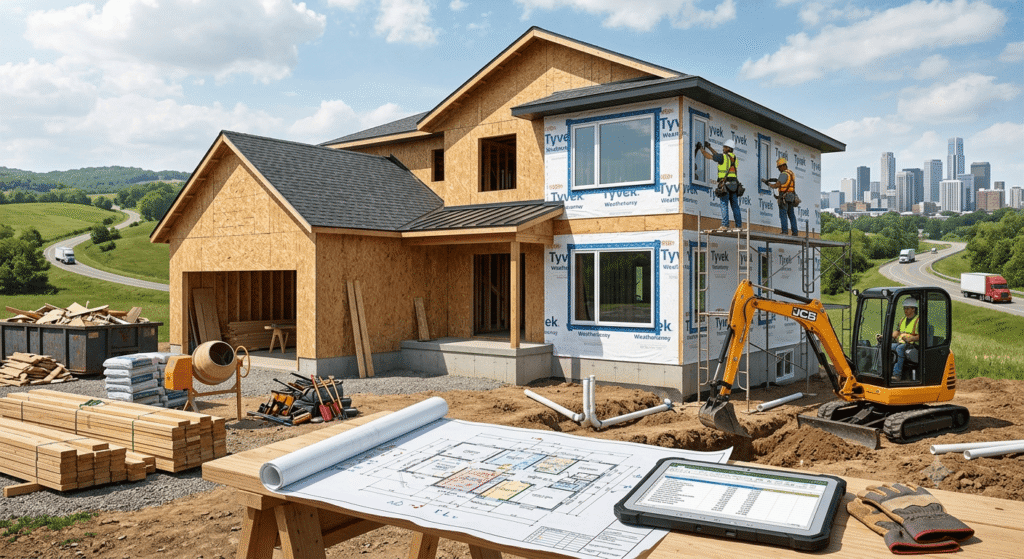
Most people picture construction site security as keeping thieves out. That’s part of it — but it’s only half the picture. Security on construction sites is just as much about keeping other people safely away from your site: curious kids drawn to scaffolding, pedestrians using it as a shortcut, or a delivery driver who wanders into an active excavation zone without realizing the risk.
Every year, members of the public — children in particular — are injured on active construction sites. That’s why how to secure a construction site properly isn’t just good practice, it’s a real legal responsibility for contractors and site managers. Beyond protecting materials and equipment from theft, a secure perimeter and controlled access are what stand between an ordinary site and a serious incident involving someone who was never supposed to be there in the first place.
This guide covers 20 practical, field-tested tips for construction site protection — covering access control, perimeter security, equipment protection, and hazard management — so your site stays secure from the first day of groundbreaking to final handover.
Why Construction Site Security Matters
Security in construction isn’t only about protecting your investment in materials and machinery, though theft and vandalism are real and costly risks. It’s also about how to prevent unauthorized building access by people who don’t understand the hazards on an active site — trenches, exposed rebar, elevated work, heavy equipment — and who could be seriously hurt without ever meaning to trespass.
Most jurisdictions place a direct legal duty on contractors to prevent unauthorized access to an active construction site, not just as a best practice, but as an enforceable safety obligation. Failing to secure a site adequately can expose a contractor to liability if a member of the public is injured, on top of the obvious risks to project timeline, materials, and equipment.
With that context, here’s how to actually build a secure site from the ground up.
Access Control and Site Monitoring
1. Implement a sign-in and sign-out system.
Knowing exactly who is on site — and confirming they’ve been inducted and trained for the work they’re doing — is the foundation of site control. It also means you can account for everyone in an emergency, and confirm the site is empty and secure at the end of each shift.
2. Use ID badges or hard hat stickers.
Visual identification makes it instantly obvious who belongs on site and who doesn’t. It’s a small step that dramatically speeds up spotting someone who shouldn’t be there, especially on larger sites with rotating trade crews.
3. Question anyone unfamiliar.
Crews change week to week — groundworkers one week, scaffolders the next — so an unfamiliar face isn’t automatically suspicious. But it should always be checked. Approach anyone you don’t recognize, confirm their reason for being on site, and escort off-site anyone who isn’t authorized.
4. Supervise all visitors.
Visitors aren’t trespassers, but they usually don’t know the site’s hazards or procedures either. Keep them accompanied at all times, and make sure they go through a basic safety induction before stepping past the gate.
5. Make sure the whole team knows the security procedures.
A locked-gate policy only works if everyone actually follows it. Every authorized person should understand — and be reminded throughout the project — what’s expected: keeping gates closed, reporting damaged fencing, not propping barriers open “just for a minute.”
Perimeter and Entry Point Security
6. Secure the full perimeter.
Solid fencing and barriers around the site boundary are the single biggest deterrent against casual, opportunistic access — including from children, who are especially vulnerable to construction site hazards. Check for gaps underneath fencing too, particularly on uneven ground, since that’s a common weak point overlooked during a quick perimeter check.
7. Post clear warning and boundary signage.
A fence alone doesn’t explain why someone’s usual route is suddenly blocked — and an unexplained barrier just invites people to climb over or find a way around. Visible danger and boundary signage around the full perimeter makes the risk clear and reduces the temptation to cut through.
8. Control and monitor entry points.
Every entrance is a potential weak point if it isn’t actively managed. Secure and monitor all access points so nobody can walk onto the site without being seen and, if necessary, challenged.
9. Lock gates outside working hours.
An unlocked gate is functionally the same as no gate. Lock every access point at the end of each shift and any time the site sits unoccupied.
10. Increase precautions during extended downtime.
Weekends, holidays, and any stretch when the site sits empty for longer than usual are prime windows for theft or vandalism. Consider added measures like CCTV monitoring or periodic security patrols during these periods.
11. Add extra layers of protection for higher-risk locations.
Sites in densely populated areas, near schools, or adjacent to occupied buildings like hospitals need more than standard fencing. Depending on the setting, that might mean taller or reinforced fencing, CCTV coverage, alarm systems, active security patrols, or clear physical segregation from the adjacent building or land use.
Protecting Equipment, Materials, and Hazard Areas
12. Remove access equipment after hours.
Ladders and scaffold access points are exactly what make elevated areas and excavations tempting — and dangerous — for anyone who shouldn’t be there, especially children. Remove or lock away access ladders from excavations and scaffolding whenever the site isn’t actively staffed.
13. Barrier off open excavations and edges.
Trenches and pits are a serious fall hazard for anyone unfamiliar with the site layout, particularly after dark. Cover or barrier off excavations, pits, and unprotected edges any time they’re not actively being worked.
14. Immobilize machinery when unattended.
Leaving keys in equipment is an open invitation — to trespassers, to theft, and to accidents from someone operating machinery they have no business touching. Immobilize every vehicle and piece of equipment when it’s left unattended, and never leave keys on-site with mobile plant or machinery.
15. Store machinery in a secure compound.
Even immobilized equipment is a target for vandalism or theft if it’s left in plain sight. Where possible, park and store vehicles and machines within a locked, secured compound, out of view from the street or adjacent public areas.
16. Keep tools and materials out of sight.
Power tools and portable equipment are some of the most commonly stolen items on a construction site, simply because they’re easy to carry off. Store them securely and out of view rather than leaving them staged in the open overnight.
17. Lock away hazardous substances.
Chemicals, solvents, and other hazardous materials can look harmless — even tempting — to someone who doesn’t understand what they are, particularly children. Store hazardous substances in secure, purpose-built storage away from general site access.
18. Stack and store materials safely.
Materials stacked carelessly, especially near the boundary, pose a real risk to passersby if they topple — and an unsecured pile of loose material is an easy target for casual theft. Make sure everything is stacked stably and, where possible, kept away from the perimeter.
Ongoing Maintenance and Weather Considerations
19. Factor in weather risk.
A storm can compromise scaffolding, barriers, and fencing just as easily as it delays work. Before severe weather hits, check that temporary structures and perimeter security are secured well enough to hold, and reinspect afterward for any damage that’s opened a gap in your site’s defenses.
20. Maintain security consistently, start to finish.
Perimeter fencing and access controls that were solid on day one can degrade over the life of a project — panels shift, locks wear out, signage fades. Regularly inspect boundary fencing and hoarding, and don’t let security procedures slip as the project moves from groundbreaking toward completion.
Building Security Into Your Project Plan
The sites that stay secure aren’t the ones that bolt on security as an afterthought — they’re the ones that plan for it from the start, the same way they plan labor, materials, and schedule. That means budgeting for fencing, signage, lighting, and any CCTV or patrol services as real line items, not a rounding error, and building daily security checks into the site supervisor’s routine rather than treating them as optional.
Frequently Asked Questions
How do you secure a construction site?
Through a combination of physical measures (perimeter fencing, locked gates, secured equipment storage) and procedural controls (sign-in/out systems, ID badges, visitor supervision, and consistent enforcement of access rules) — layered together rather than relying on any single measure alone.
What is the best way to prevent unauthorized access to a construction site?
A secured, gap-free perimeter combined with monitored, locked entry points is the foundation. Clear signage reinforces it by explaining the barrier rather than leaving people to guess and potentially climb over or around it.
Why is security important in construction?
It protects two things at once: your materials, equipment, and project investment from theft and vandalism, and members of the public — especially children — from serious hazards like open excavations, elevated work areas, and unattended machinery.
Do small construction sites need the same level of security as large ones?
The core principles apply at any scale — controlled access, a secured perimeter, and hazard barriers — though the specific measures (fencing height, CCTV, patrols) generally scale up with site size, location, and the level of public exposure around the site.
Final Thoughts
Construction site protection isn’t just about stopping theft — it’s about controlling exactly who can access a genuinely hazardous environment, and making sure the people who shouldn’t be there never get the chance to find out how dangerous it can be. The 20 measures above, applied consistently from the first day of site setup through final cleanup, cover the access control, perimeter security, and hazard management that keep both your project and the public around it safe.
If you’re budgeting a new project and want site security — fencing, signage, monitoring — properly accounted for in your overall cost plan rather than tacked on later, Digital Estimating can help build that into your full project estimate from the start.