
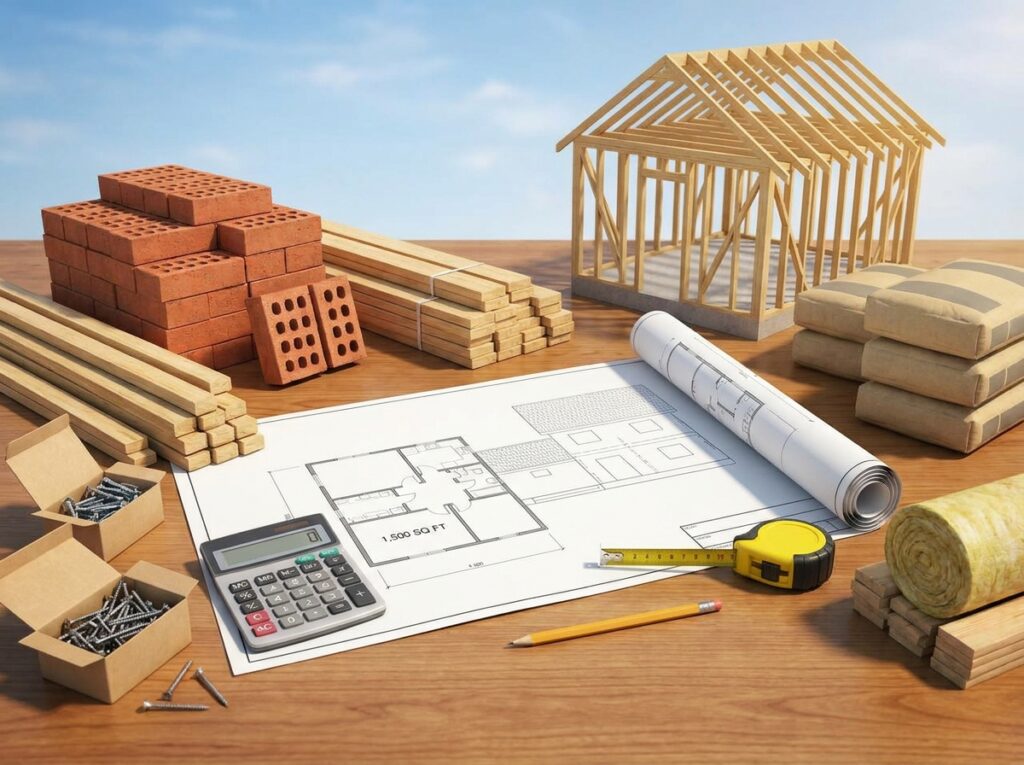
Planning to build a 1,500 sq ft house? One of the biggest questions homeowners, contractors, and developers ask is:
How much material will actually be needed?
The answer starts with an accurate material estimate.
A detailed material estimate is one of the most important parts of any successful construction project. It helps you understand:
- How much material is required
- What the total construction cost may look like
- Which materials are needed at each stage
- How to avoid waste, delays, and budget overruns
Without proper estimating, it’s easy to underestimate costs or run into unexpected shortages halfway through construction.
However, there’s no one-size-fits-all answer. The amount of material required for a 1,500 sq ft house depends on several factors, including:
- Number of floors
- House design and layout
- Geographic location
- Material quality
- Structural requirements
- Finishing preferences
For example, a single-story home may require different quantities of concrete, steel, and bricks compared to a double-story house of the same square footage.
From the foundation to the final finishes, every construction stage needs careful planning. A professional estimate typically includes material quantities for:
- Structural work
- Roofing
- Flooring
- Plumbing
- HVAC systems
- Electrical components
- Interior and exterior finishes
A well-prepared estimate helps you clearly understand the quantity, quality, and type of materials required throughout the project, making it easier to build a realistic budget and avoid costly surprises later.
Whether you’re a homeowner building your dream house, a contractor managing construction, or a developer planning a project, understanding material requirements early can help bring your vision to life — without compromising on quality or overspending.
Essential Materials Needed to Build a 1,500 Sq Ft House
Building a 1,500 sq ft house is exciting, but one thing that often surprises homeowners is how much planning goes into choosing the right materials.
Did you know that selecting durable, high-quality materials in the correct quantities not only strengthens your home but also improves comfort, appearance, and long-term value?
The right materials help create:
- A stronger structure
- Better durability over time
- Comfortable living spaces
- A more attractive home design
- Fewer construction delays and costly material shortages
That’s why understanding your material requirements before construction begins is so important.
If you’re planning a 1,500-square-foot house, this guide will help you understand the major materials needed at every stage of construction — from the foundation to the finishing touches.
1. Base Materials (Foundation Stage)
Every strong house starts with a strong foundation.
The foundation carries the weight of the entire structure, which means choosing quality materials and accurate quantities is critical.
For a 1,500 sq ft house, the foundation stage typically requires:
Cement
Approximately 600 bags of cement are commonly needed for foundation work.
Cement helps bind materials together and provides structural strength.
Sand
Around 1,800–2,000 cubic feet of sand may be required.
Sand is mainly used for:
- Mortar preparation
- Concrete mixing
- Foundation leveling
Crushed Stone (Aggregate)
About 1,400–1,500 cubic feet of crushed stone is often needed.
Crushed stone strengthens concrete and improves load-bearing capacity.
Steel Reinforcement
Most 1,500 sq ft homes require roughly:
2–2.5 tons of steel
Steel reinforcement improves:
- Structural stability
- Load support
- Crack resistance
Waterproofing Materials
Proper waterproofing helps prevent:
- Moisture penetration
- Water leakage
- Foundation damage over time
Skipping waterproofing often leads to expensive repairs later.
2. Structural Framework Materials
The structural framework is the skeleton of your home.
It includes:
- Columns
- Beams
- Slabs
These components support the building and distribute weight evenly throughout the structure.
For structural work, a 1,500 sq ft house may require approximately:
- 200 bags of cement
- 13 tons of aggregate
- 2.5 tons of steel
The exact amount depends on:
- Number of floors
- Design complexity
- Load requirements
Accurate estimates at this stage are essential to avoid costly shortages or delays during construction.
3. Wall Construction Materials
Walls define the layout and structure of your house, and material quantities vary depending on design style and local availability.
For a typical 1,500 sq ft home, wall construction may require:
Bricks or Blocks
Approximately:
- 16,000 bricks, or
- 1,300 concrete blocks
The exact quantity depends on:
- Wall height
- Room layout
- Architectural design
Mortar Materials
Mortar is used to bind bricks and blocks together.
For wall construction, you may need:
- Around 90 bags of cement
- Approximately 7–8 tons of sand
Using high-quality mortar improves wall strength and durability.
4. Roofing Materials
A durable roof protects your home from weather, moisture, and temperature changes.
Accurate roofing estimates are important to avoid:
- Material shortages
- Roof cracks
- Installation delays
Clay Roof Tiles
On average:
200 clay tiles are needed per 100 sq ft
For a 1,500 sq ft house, roofing material requirements will depend on:
- Roof design
- Pitch angle
- Material type
Additional Roofing Materials
You may also need:
- Metal sheets
- Waterproof membranes
- Insulation materials
Good roofing materials not only improve durability but also help regulate indoor temperatures.
5. Flooring Materials
Flooring adds both beauty and functionality to your home.
Popular flooring choices include:
- Tiles
- Marble
- Hardwood
- Vinyl
For a 1,500 sq ft house, approximately:
1,000 flooring tiles may be required.
Important Tip
Always order about 10% extra material to account for:
- Cutting waste
- Breakage
- Design adjustments
Subfloor preparation may also require:
- Cement screed
- Self-leveling compounds
to ensure a smooth and durable finish.
6. Plumbing & Electrical Materials
Plumbing and electrical systems are essential for a functional home, and their material requirements depend heavily on the house layout.
Plumbing Materials
Typical plumbing systems require:
- CPVC or PEX pipes
- Drainage fittings
- Water fixtures
- Valves and connectors
Standard pipe sizes often include:
- ¾ to 1-inch pipes for water supply
- 1.5 to 3-inch pipes for drainage systems
Electrical Materials
For electrical installation, a 1,500 sq ft house may require approximately:
2,200 feet of wiring
Other electrical materials include:
- Switches
- Circuit breakers
- Power outlets
- Electrical panels
Most wiring and plumbing systems are installed inside walls to maintain a clean design.
7. Windows & Doors
Doors and windows improve:
- Security
- Ventilation
- Natural lighting
- Comfort
For a typical 1,500 sq ft home, you may need:
Doors
Around:
13–15 doors
Windows
Approximately:
10–12 windows
Additional hardware includes:
- Hinges
- Locks
- Handles
- Frames
Professional installation helps improve energy efficiency and long-term performance.
8. Finishing Materials
The finishing stage is where your house begins to feel like a home.
This stage typically includes:
- Primer application
- Wall smoothing
- Painting
- Decorative finishes
For a 1,500 sq ft house, you may need approximately:
Paint
Around:
35 liters of paint
Primer
About:
20 liters of primer
Decorative choices such as:
- Wallpaper
- Texture finishes
- Wall stencils
depend entirely on personal preference and design goals.
9. Exterior & Landscaping Materials
The exterior creates the first impression of your home.
Common exterior materials include:
- Weather-resistant paint
- Stone cladding
- Decorative panels
- Pavers
Landscaping may include:
- Pathways
- Garage surfaces
- Lawn areas
- Drainage systems
Outdoor spaces can also be enhanced with:
- Garden furniture
- Lighting
- Water fountains
- Decorative plants
The quantity of exterior materials depends heavily on your landscape design.
Final Thoughts
Building a 1,500 sq ft house becomes much easier when proper planning, quality materials, and realistic budgeting work together.
Understanding material quantities from the foundation to final finishes helps you:
- Reduce waste
- Avoid delays
- Stay within budget
- Improve construction quality
Since every home design is different, exact material requirements can vary based on:
- Layout
- Floors
- Design complexity
- Local construction standards
That’s why working with an experienced estimator or contractor can help ensure you purchase the right materials in the right quantities.
With smart planning and the right approach, building your dream home becomes far less stressful — and much more rewarding.
Frequently Asked Questions
Why is it important to set a budget before starting construction?
Having a clear budget helps you stay in control of your construction project from start to finish. It allows you to:
- Plan material and labor costs properly
- Avoid unexpected expenses and overspending
- Prioritize important features without compromising quality
- Reduce delays caused by budget shortages
A well-planned budget also makes it easier to make smart decisions and keep your project running smoothly.
Do you recommend traditional construction designs for a 1,500 sq ft house?
It depends on your style, needs, and budget.
We recommend both traditional and modern home designs, depending on what works best for you.
- Traditional designs are often more durable, practical, and budget-friendly.
- Modern designs usually focus on aesthetics, open spaces, and energy efficiency.
You can also choose a custom design that combines the charm of traditional layouts with modern features to create a home that fits both your lifestyle and budget.
What are your tips for sourcing quality materials while staying on budget?
Getting quality materials without overspending is possible with smart planning.
Here are a few practical tips:
- Compare prices from multiple suppliers before purchasing
- Buy materials in bulk when possible to reduce costs
- Choose durable materials that offer long-term value, not just lower upfront prices
- Work with experienced contractors or estimators who can help avoid unnecessary waste
- Plan purchases early to avoid last-minute price increases
The key is finding the right balance between quality, durability, and affordability so you can build a home that lasts without stretching your budget too far.