
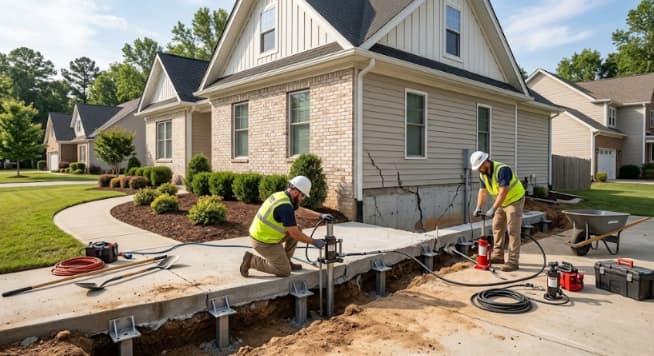
A home’s foundation carries the weight of everything above it, so when it starts to fail, the problem rarely stays small. Cracks, uneven floors, and sticking doors are more than cosmetic annoyances; left unaddressed, they can compromise structural safety and quietly erode your home’s resale value.
The good news is that foundation repair costs are predictable once you understand the variables involved. Your final bill depends on the type of foundation, the severity of the damage, your property’s size and location, and which repair method a contractor recommends. This guide walks through what foundation repair actually costs in 2026, what drives those numbers up or down, and practical ways to keep the project affordable without cutting corners on safety.
How Much Does Foundation Repair Cost in 2026?
Before estimating a project, it helps to know which issues are most common. Foundation problems typically stem from soil movement, poor drainage, settling, or long-term pressure against the foundation walls. Expansive soil, erosion, tree root intrusion, and shifting moisture levels are among the most frequent culprits behind cracking, bowing walls, and sinking corners.
Pricing generally falls into three broad tiers, depending on the scope of the damage.
Repair Tier | Estimated Cost Range |
Low end (minor cracks, small repairs) | $2,200 – $4,800 |
Average foundation repair | $4,800 – $11,000 |
High end (major structural work) | $16,000 – $27,000 |
These figures reflect typical 2026 market pricing, though material costs, labor rates, and permitting fees vary by region.
Foundation Repair Cost Breakdown by Method
Different problems call for different repair techniques, and each method comes with its own price range. The table below outlines common approaches and what homeowners can expect to pay in 2026.
Repair Method | Estimated Cost Range |
Epoxy or polyurethane crack injection | $300 – $900 |
Foundation crack repair (general) | $275 – $850 |
Drainage and gutter correction | $1,600 – $6,500 |
Foundation jacking | $650 – $1,800 |
Underpinning or piering (per pier) | $1,100 – $3,300 |
Full piering project (multiple piers) | $5,500 – $22,000+ |
Foundation wall stabilization | $4,300 – $13,000 |
Settling and sinking foundation repair | $550 – $3,200 |
Basement waterproofing | $3,200 – $11,000 |
House leveling | $4,300 – $16,000 |
Foundation sealing | $2,200 – $7,500 |
Bowing wall repair | $4,300 – $16,000 |
Small, isolated cracks are almost always the cheapest fix. Structural issues that involve leveling, underpinning, or wall stabilization sit at the higher end because they require specialized equipment, engineering oversight, and more labor hours.
What Affects the Cost of Foundation Repair?
No two foundation repair jobs are priced the same, since several variables interact to determine the final number.
Home Size and Site Access
Larger homes generally cost more to repair simply because there is more foundation to work on. Site access matters just as much, though. If crews cannot reach the affected area easily, or if landscaping, decks, or hardscaping need to be removed and later restored, the project cost climbs regardless of the home’s size.
Severity of the Damage
A hairline crack caught early is far cheaper to fix than a foundation that has already begun sinking or shifting. Catching problems in their early stages keeps repair costs low and prevents secondary damage to interior walls, flooring, and framing, which can turn a moderate repair into a much larger renovation.
Foundation and Soil Type
Soil is rarely as stable as it looks. Expansive clay, poorly draining soil, and soil with high moisture content shift more than sandy or well-drained ground, which puts uneven pressure on a foundation over time. A foundation built on unstable soil is more likely to need significant, and more expensive, repair work down the line.
Soil Conditions Over Time
Even a foundation designed correctly for its original soil conditions can run into problems years later if drainage patterns change or moisture levels shift. In these cases, a geotechnical engineer may need to evaluate the site. These assessments typically cost between $500 and $3,200 and can pinpoint the underlying cause rather than just the visible symptoms.
Structural Engineering Reports
For more serious damage, a structural engineer’s report is often required before repair work begins. This report documents the extent of the problem and recommends a repair approach, and typically costs between $300 and $1,600, depending on the complexity of the evaluation.
Materials, Labor, and Permits
Labor is usually the largest line item in a foundation repair estimate. As of 2026, foundation repair labor averages around $210 per hour in most markets, though this varies by region and contractor. Materials such as piers, polyurethane foam, epoxy, or waterproofing membrane add to the total. Minor crack repairs may not require a permit, but larger structural work typically does, adding another $75 to $175 to the project.
Ways to Save on Foundation Repair Costs
Foundation repair is not an area where cutting corners pays off, but there are legitimate ways to keep costs under control without compromising the quality of the fix.
Address Problems Early
Small cracks and minor settling rarely stay small. Scheduling regular inspections and acting on early warning signs, such as hairline cracks, doors that stick, or slightly uneven flooring, prevents those issues from escalating into structural repairs that cost several times more.
Ask About Less Invasive Repair Options
For minor cracking, epoxy or polyurethane injection is often a fraction of the cost of piering or wall stabilization. Ask your contractor whether a less invasive method is appropriate before committing to a larger repair.
Fix the Underlying Cause
Many foundation issues trace back to poor drainage. Confirm that gutters, downspouts, and grading are directing water away from the foundation before or alongside any structural repair. Fixing the root cause prevents the same problem from recurring after the repair is finished.
Get Multiple Quotes
Foundation repair pricing varies significantly between contractors. Requesting quotes from at least three reputable companies, and making sure each quote covers the same scope of work, gives homeowners a realistic sense of fair market pricing in their area.
Negotiate and Ask About Financing
Many foundation repair companies offer payment plans that spread the cost over several months. It is also reasonable to negotiate, particularly when comparing multiple quotes. Being upfront about your budget can sometimes lead to a lower price or added services at no extra cost.
Check Warranty and Insurance Coverage
Some foundation repair companies offer workmanship warranties. Separately, homeowners should check whether their insurance policy covers any portion of the damage, particularly if it resulted from a covered event such as a plumbing leak. Policy language varies widely, so confirm coverage details directly with your insurer.
Schedule During the Off-Season
In regions with cold winters, foundation repair companies are often less busy during the colder months. Scheduling non-urgent repairs during this slower season can sometimes result in a lower quote.
How to Estimate Foundation Repair Costs Step by Step
For homeowners who want to understand the scope of a project before calling a contractor, these steps outline a practical approach to estimating cost.
- Identify visible damage. Check window and door frames for gaps, inspect walls and ceilings for cracks, and note any doors or windows that no longer close properly.
- Document affected areas. Record crack sizes, floor leveling issues, and any separation along exterior walls. Detailed documentation makes it easier for a contractor to scope materials and labor accurately.
- Measure the affected perimeter. Measure the linear footage of exterior walls showing signs of damage using a tape measure, property survey, or mapping tool.
- Calculate support requirements. For pier-based repairs, divide the total linear footage of damaged wall by seven to estimate the number of piers needed, then round up and add one extra pier for a safety margin.
- Research local pricing. Contact several local foundation repair contractors for pricing on the specific repair method under consideration, since rates vary by region.
- Consult a professional. Bring in a licensed foundation repair specialist or structural engineer for a full inspection and written quote before starting work.
- Budget for contingencies. Set aside an additional 10 to 15 percent of the estimated project cost to cover unexpected complications, which are common once repair work begins.
Common Types of House Foundations
The type of foundation your home was built on affects both how it fails and how it gets repaired.
Crawl Space Foundations
A crawl space foundation typically raises the home at least 18 inches above grade using a concrete or block perimeter wall. This unheated space often houses ductwork, plumbing, or the furnace, and proper ventilation is essential to prevent moisture buildup. Repairs to crawl space foundations tend to be more accessible and less expensive than basement or slab work.
Concrete Slab Foundations
Slab foundations sit directly on the ground with no crawl space or basement beneath them. While hairline cracks in a slab are not always a sign of structural failure, moisture intrusion and uneven settling can still create costly problems if left unchecked.
Cinder Block and Brick Foundations
These foundations are built from stacked, mortared block or brick, sometimes reinforced with steel rebar running horizontally and vertically for added strength. Over time, cracking, bowing, or leaking along the mortar joints is common, particularly in homes with drainage issues around the perimeter.
Basement Foundations
A full basement foundation adds usable square footage and performs well in colder climates where the ground freezes seasonally. Because basement construction involves significant excavation and concrete work, it is typically the most expensive foundation type to build and among the more costly to repair extensively.
Pier and Beam Foundations
Also called post and beam foundations, this style elevates the home several feet above ground level, creating an open crawl space that helps protect against moisture damage. Repairs usually involve adjusting or replacing individual piers rather than reworking the entire foundation system.
Don’t Wait to Address Foundation Problems
Foundation issues rarely improve on their own, and rising labor and material costs in 2026 make early action even more valuable. A repair that costs a few hundred dollars today can turn into a multi-thousand-dollar structural project if postponed for even a year or two.
If you notice cracks, gaps, or uneven flooring in your home, the smartest first step is getting an accurate, professional estimate before costs escalate further. Digital Estimating helps homeowners and contractors put together detailed, realistic foundation repair estimates so every material, labor hour, and permit fee is accounted for before work begins.
Frequently Asked Questions
How much does foundation repair cost on average in 2026?
Most homeowners spend between $4,800 and $11,000 for a typical foundation repair, though minor crack repairs can cost as little as $2,200 and major structural work can exceed $20,000.
How long does foundation repair take?
Timelines depend on the size and complexity of the damage. A standard residential repair often takes one to two weeks, while larger or more complex projects can take longer, especially if weather delays work.
Is foundation repair covered by homeowners insurance?
Coverage depends on the cause of the damage. Standard wear and settling are typically not covered, but damage caused by a covered peril, such as a burst pipe, may be included. Always confirm details directly with your insurance provider.
Can I repair a foundation crack myself?
Very minor, non-structural surface cracks can sometimes be addressed with a DIY epoxy kit, but any crack tied to settling, bowing, or water intrusion should be evaluated by a professional before attempting a repair.
What is the cheapest way to fix a foundation problem?
For minor cracking, epoxy or polyurethane injection is generally the most affordable option, often costing a few hundred dollars compared to thousands for piering or wall stabilization.