
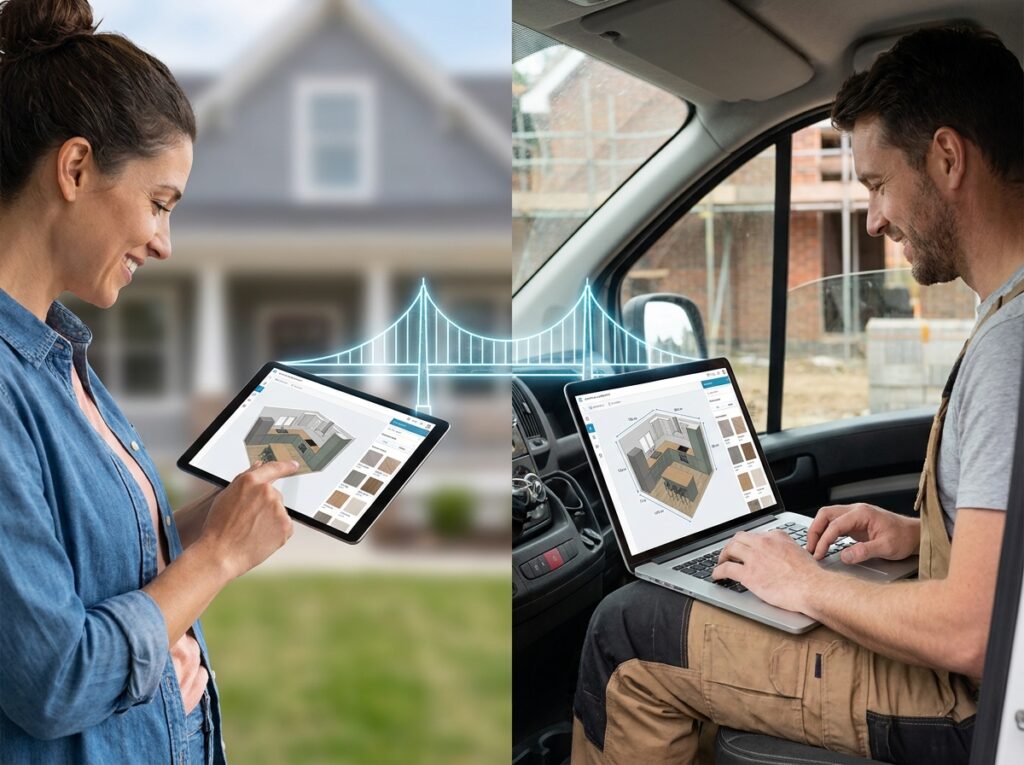
In a fast-moving construction and home improvement market, virtual estimates are quickly becoming the preferred way to plan projects without the delays of traditional site visits. Whether you’re a homeowner planning a renovation or a contractor managing multiple bids, the ability to receive accurate pricing remotely is a game-changer.
Virtual estimates refer to remote estimates or online project estimates created using photos, videos, 3D scans, and digital tools instead of in-person inspections. Also known as virtual construction estimates, remote project estimation, or online contractor quotes, these solutions are transforming how projects are scoped and priced.
This guide will answer:
- What are virtual estimates?
- How virtual estimates work
- The difference between virtual estimates for homeowners and contractors
From a U.S. construction estimating expert’s perspective, this article explains how virtual estimating services are streamlining project planning, cost estimation, and decision-making for busy professionals and homeowners alike.
What Are Virtual Estimates?
Core Definition and Scope
Virtual estimates are digital cost assessments created without physically visiting a job site. Instead, they rely on:
- Photos and videos submitted by clients
- Live video consultations
- 3D scans and remote measurement tools
They cover a wide range of applications, including:
- Virtual home renovation estimates
- Remote repair estimates
- Online remodeling estimates
- Virtual insurance estimates for property damage
These are often referred to as digital project estimates, remote property estimates, or online construction estimates.
How They Fit Into Project Planning
Virtual estimates are especially valuable during the early stages of project planning. They allow homeowners and contractors to:
- Quickly evaluate costs
- Compare multiple quotes
- Make informed decisions without delays
By integrating into a digital workflow, virtual estimates reduce the need for repeated site visits and speed up the overall planning process.
How Virtual Estimates Work
Typical Workflow for Homeowners
For homeowners, the process is simple and accessible:
- Take clear photos and videos of the project area using a smartphone
- Submit them through an online estimate request platform
- Receive a detailed remote renovation cost estimate or repair quote
This process allows homeowners to get multiple quotes quickly, often within 24–48 hours.
Contractor Side: Remote Takeoff and Digital Cost Estimating
On the contractor side, virtual estimates involve:
- Remote takeoff services to measure quantities
- Digital cost estimating software to calculate pricing
- Estimate management apps to organize and deliver quotes
Contractors can generate virtual bid estimates and respond to more clients without leaving their office, improving efficiency and profitability.
AI-Driven and Automation Layers
Modern virtual estimating relies heavily on technology, including:
- AI-powered construction estimating tools
- Smartphone-based 3D scanning apps
- Real-time measurement software
These tools enable faster and more accurate remote project cost estimation, even for complex projects.
Benefits for Homeowners and Contractors
Time-Saving Tools for Busy Homeowners
For homeowners, virtual estimates eliminate the need to:
- Schedule multiple on-site visits
- Wait days or weeks for quotes
- Coordinate with multiple contractors in person
Instead, they can get a virtual estimate today, compare options, and move forward with confidence.
Efficiency Gains for Contractors
Contractors benefit by:
- Reducing travel time and costs
- Increasing the number of estimates per day
- Streamlining their digital workflow
Virtual estimates allow contractors to scale operations while maintaining accuracy and responsiveness.
Lower Carbon and Eco-Friendly Estimating
By reducing unnecessary travel, virtual estimates contribute to:
- Lower fuel consumption
- Reduced emissions
- More sustainable business practices
This aligns with growing demand for eco-friendly construction solutions.
Technology Used in Virtual Estimating
Video and 3D Technologies
Tools like Zoom and video calls enable real-time consultations, while 3D scanning apps allow homeowners to capture dimensions accurately.
These technologies support:
- Video call contractor estimates
- 3D scanning estimates
- Remote project walkthroughs
Software and Apps
Modern virtual estimating platforms include:
- Virtual quote software
- Digital project planning tools
- Estimate management applications
These tools integrate estimates with schedules, materials, and project timelines.
Use Cases Across Industries
Home Renovation:
- Virtual renovation estimate
- Online remodeling estimate
Insurance:
- Virtual insurance estimates
- Remote damage assessment
Landscaping:
- Virtual landscaping estimate
- Online backyard design estimate
Best Practices for Accurate Remote Estimates
For Homeowners Submitting Photos and Video
To ensure accuracy:
- Take well-lit photos from multiple angles
- Focus on key areas (damage or work zones)
- Include scale references (measuring tape, furniture)
For Contractors Doing Remote Takeoffs
Contractors should:
- Use digital takeoff tools for accuracy
- Add contingencies for unseen conditions
- Standardize estimate templates
Quality Control and Scope Management
Clear scope definition is critical. Virtual estimates should include:
- Detailed descriptions
- Assumptions and exclusions
- Revision tracking
This helps avoid misunderstandings and scope creep.
Common Challenges and Solutions
Limitations of Remote Assessments
Challenges include:
- Hidden structural issues
- Limited visibility
- Lack of physical inspection
Solution: Use virtual estimates as a first step, followed by targeted site visits if needed.
Data and Connectivity Issues
Poor image quality or slow uploads can affect accuracy. Encourage high-quality submissions and reliable platforms.
Client Trust and Expectations
Some clients may hesitate to trust remote estimates. Transparency and clear communication help build confidence.
Frequently Asked Questions (FAQs)
What are virtual estimates and how are they different from in-person estimates?
Virtual estimates are created remotely using digital tools, while in-person estimates require physical site visits. Virtual options are faster and more convenient.
How do virtual estimates work for homeowners and contractors?
Homeowners submit photos or videos, and contractors use digital tools to create accurate cost estimates remotely.
Can virtual estimates be accurate for home renovation and repair?
Yes, especially for standard projects. Accuracy improves with clear images and advanced tools like 3D scanning.
What are virtual insurance estimates?
They are remote damage assessments used by insurers to evaluate claims without on-site inspections.
How do AI-powered tools improve estimates?
They automate measurements, analyze data, and reduce human error, improving speed and accuracy.
How can I get a virtual estimate today?
You can request an online estimate, upload photos, or schedule a virtual consultation with a contractor.
Are virtual estimates reliable for high-value projects?
Yes, but they may be supplemented with in-person verification for complex or high-budget jobs.
Get Your Virtual Estimate Today
In today’s fast-paced construction environment, virtual estimates are the smartest way to plan projects quickly and efficiently.
If you’re a homeowner or contractor looking for fast, accurate, and hassle-free estimates, it’s time to go digital.
Digital Estimating offers professional virtual estimating services designed for speed, accuracy, and convenience.
How to get started:
- Upload your project photos or videos
- Request an online estimate
- Schedule a virtual consultation if needed
- Receive a detailed digital quote within a fast turnaround time
With Digital Estimating, you gain access to expert estimators, advanced tools, and reliable pricing insights—all without leaving your home or job site.
Conclusion: The Future of Virtual Estimates
The construction industry is evolving, and virtual estimates are at the center of that transformation. They provide faster turnaround times, improved efficiency, and greater flexibility for both homeowners and contractors.
As technology continues to advance—with AI tools, 3D scanning, and real-time measurement—virtual estimates will become the standard for project planning and cost estimation.
If you want to stay competitive, save time, and improve decision-making, embracing virtual estimates is no longer optional—it’s essential for modern construction workflows.