
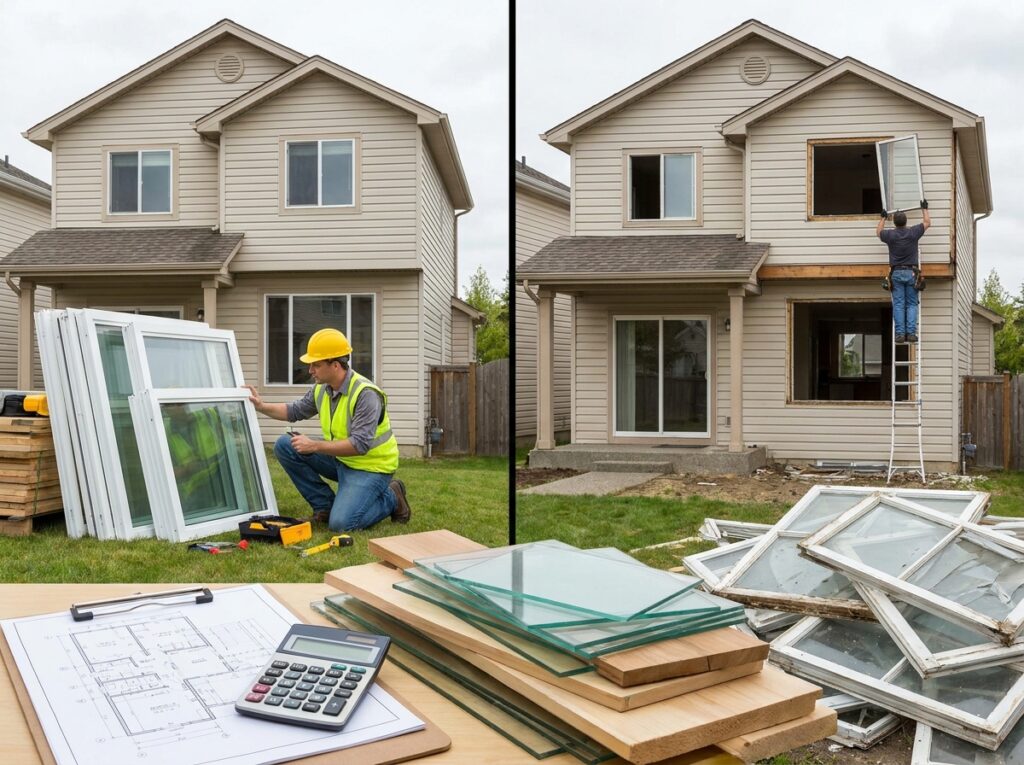
Most homeowners barely think about their windows until something starts going wrong. Maybe you feel a cold draft every winter, notice fog trapped between the glass panes, or struggle to open a window that suddenly feels stuck forever. That’s usually the moment people start researching replacement costs — and quickly realize window replacement is a much bigger project than expected.
In fact, replacing windows is one of the largest upgrade expenses many homeowners face during a renovation. And for a typical 2,000-square-foot house, the total cost can vary a lot depending on the window style, material, energy efficiency, and labor involved.
On average, replacing all the windows in a 2,000 sq ft home costs somewhere between $7,000 and $22,000+, including both materials and installation.
The tricky part is that no two homes are priced exactly the same.
One house may only need 10 windows, while another has 20 or more. Some basic vinyl windows cost just a few hundred dollars installed, while large custom windows can cost thousands each. Labor costs also change depending on the condition of the existing frames, accessibility, and whether installers discover hidden issues like wood rot or water damage during removal.
That’s why it helps to understand how the pricing actually works before requesting quotes or comparing window styles online.
In this guide, we’ll break down:
- Average replacement window costs
- Material and labor pricing
- Cost per window type
- Hidden expenses homeowners often miss
- Sample whole-house budgets for a 2,000 sq ft home
By the end, you’ll have a much clearer idea of what to expect and how to budget realistically for your project.
Quick Cost Estimate for a 2,000 Sq Ft House
The short answer? Window replacement costs vary widely because not all windows are built the same.
A basic vinyl replacement window will cost much less than a large custom wood or triple-pane unit. Energy-efficient upgrades, specialty shapes, and premium materials can quickly push the total higher.
Based on industry averages and national installation data, most homeowners typically pay within these ranges:
- Low-end replacement windows: around $400–$600 per window installed
- Mid-range energy-efficient windows: around $700–$1,050 per window installed
- High-end or specialty windows: around $1,200–$2,000+ per window installed
These estimates include both materials and professional labor.
To estimate a full-house project, installers usually multiply the per-window cost by the total number of windows in the home.
For example:
- A smaller home with 10 basic windows may stay near the lower end of the budget
- A home with 20+ upgraded or custom windows can easily move into the higher price range
Here’s a quick breakdown:
Low-End Window Replacement
Basic vinyl insert windows or simple full-frame replacements typically cost:
$400–$600 per window
Best for:
- Budget-conscious renovations
- Rental properties
- Standard window sizes
Mid-Range Window Replacement
Energy-efficient double-pane windows with upgraded frames usually cost:
$700–$1,050 per window
Best for:
- Most modern homes
- Better insulation and comfort
- Long-term energy savings
High-End & Specialty Windows
Large picture windows, bay windows, custom shapes, wood frames, and triple-pane glass often cost:
$1,200–$2,000+ per window
Best for:
- Luxury homes
- Premium curb appeal
- Maximum energy efficiency
- Unique architectural designs
The final cost of your project depends on several factors, including:
- Total number of windows
- Window size and style
- Frame material
- Energy-efficiency upgrades
- Installation complexity
- Existing frame condition
That’s why getting detailed quotes from professionals is so important before starting the project.
Window Replacement Cost for a 2,000 Sq Ft House
The total cost of replacing windows in a 2,000-square-foot home can vary widely depending on the number of windows, the frame material, glass upgrades, and installation complexity. On average, homeowners usually spend anywhere between $6,000 and $24,000+ for a full-house replacement project.
Most mid-range projects typically fall between $8,000 and $18,000, especially for standard vinyl or fiberglass window replacements.
Estimated Total Window Replacement Costs
Number of Windows | Low-End Cost ($400–$600 per window) | Mid-Range Cost ($700–$1,050 per window) | High-End Cost ($1,200–$2,000+ per window) |
10 Windows | $4,000 – $6,000 | $7,000 – $10,500 | $12,000 – $20,000+ |
15 Windows | $6,000 – $9,000 | $10,500 – $15,750 | $18,000 – $30,000+ |
20 Windows | $8,000 – $12,000 | $14,000 – $21,000 | $24,000 – $40,000+ |
These are general industry averages, and actual pricing depends heavily on your window style, material choice, installation method, and the condition of your home.
Window Replacement Cost Breakdown
Replacing windows is not just about buying the windows themselves. Several different factors combine to create the final project cost.
Material Costs
Window materials often make up the largest portion of the budget, and prices vary significantly depending on the frame type and quality.
Vinyl Windows
Vinyl windows are usually the most affordable option. Standard vinyl replacement windows generally cost between $300 and $800 per window installed.
Why homeowners choose vinyl:
- Budget-friendly
- Low maintenance
- Energy efficient
- Widely available
However, lower-quality vinyl may warp over time in extreme heat.
Fiberglass & Composite Windows
Fiberglass and composite windows are stronger and more durable than vinyl. They handle temperature changes better and require very little maintenance.
Typical cost:
- Around $400 to $1,200 per window
These windows cost more upfront but often last longer and perform better over time.
Wood Windows
Wood windows sit at the premium end of the market.
Typical cost:
- Around $1,000 to $3,000+ per window
They offer a timeless appearance and excellent insulation, but they require regular maintenance like painting or sealing to prevent damage.
Aluminum Windows
Aluminum frames are popular in modern-style homes and certain warmer climates.
Typical cost:
- Around $1,000 to $2,500 per window
They are lightweight and sleek but may not provide the same insulation performance as other materials.
Glass & Glazing Upgrades
Glass options also affect pricing more than many homeowners expect.
Features like:
- Double-pane or triple-pane glass
- Low-E coatings
- Argon or krypton gas fills
…can increase the cost by $50 to $200+ per window, but they improve energy efficiency, indoor comfort, and noise reduction.
Material | Average Cost Per Window | Key Benefits |
Vinyl | $300–$800 | Affordable and low maintenance |
Fiberglass | $400–$1,200 | Durable and weather-resistant |
Wood | $1,000–$3,000+ | Premium appearance and insulation |
Aluminum | $1,000–$2,500 | Modern look and lightweight |
Glass Upgrades | +$50–$200+ | Better efficiency and comfort |
Even small upgrades can noticeably impact the final project total.
Labor Costs: What Installers Charge
Installation labor is another major part of the overall budget. Most contractors charge somewhere between $100 and $300 per window for standard installations.
However, labor costs can increase depending on:
- Older window framing
- Difficult access
- Multi-story homes
- Brick or stone exteriors
- Hidden water damage or rot
- Large or custom-sized windows
Simple insert replacements are usually faster and cheaper, while full-frame replacements require more labor and materials.
Hidden Costs & Extra Charges
Many homeowners focus only on the window price and overlook the smaller costs that add up during installation.
Full-Frame vs Insert Replacement
A full-frame replacement removes the entire existing window frame and exposes the surrounding structure. This method costs more but allows installers to inspect for hidden damage and improve insulation.
Insert replacements are less expensive because the original frame stays in place.
Repairs & Structural Issues
Older homes often reveal unexpected problems during installation, including:
- Rotting wood
- Water damage
- Poor insulation
- Damaged trim
Repair work can increase the final bill quickly.
Additional Expenses
Other common add-ons include:
- New trim or casing
- Flashing upgrades
- Disposal fees
- Painting or staining
- Interior finishing work
Individually, these costs may seem minor, but together they can significantly raise the total project price.
Real Sample Budgets for a 2,000 Sq Ft House
Window replacement costs can vary more than most homeowners expect. Two homes with the same square footage can end up with completely different price tags depending on the window type, installation difficulty, and materials used.
One project may stay relatively affordable with standard vinyl windows, while another jumps dramatically because of custom shapes, premium materials, or complicated installation work.
The examples below give you a realistic idea of what homeowners commonly spend for a full-house window replacement project.
Example 1: 10 Basic Vinyl Full-Frame Replacements
This is the most budget-friendly full-frame replacement option.
What’s Included
- Standard double-hung vinyl windows
- Simple installation
- Minimal trim work
- Basic disposal and cleanup
These windows are practical, affordable, and work well for homeowners focused mainly on function and cost savings.
Item | Cost Per Unit | Quantity | Total |
Vinyl Window | $350 | 10 | $3,500 |
Labor | $150 | 10 | $1,500 |
Disposal & Trim | $50 | 10 | $500 |
Total Project Cost | — | — | $5,500 |
Average Cost Per Window:
Around $550 installed
This type of project is usually fast, straightforward, and ideal for standard homes without major structural issues.
Example 2: 15 Mid-Range Vinyl or Fiberglass Low-E Windows
This is where many homeowners land when they want better insulation, improved comfort, and stronger long-term performance.
What’s Included
- Vinyl or fiberglass frames
- Energy-efficient Low-E glass
- More detailed installation work
- Minor flashing and trim upgrades
These windows cost more upfront but can help lower heating and cooling costs over time.
Item | Cost Per Unit | Quantity | Total |
Vinyl/Fiberglass Low-E Window | $500 | 15 | $7,500 |
Labor | $200 | 15 | $3,000 |
Trim, Disposal & Flashing | $75 | 15 | $1,125 |
Total Project Cost | — | — | $11,625 |
Average Cost Per Window:
Around $775 installed
This option offers a good balance between affordability, energy efficiency, and appearance.
Example 3: 20 High-End or Specialty Windows
This is the premium category — large custom windows, luxury materials, and architectural styles designed to make a visual impact.
What’s Included
- Bay or bow windows
- Large picture windows
- Wood or aluminum-clad frames
- Triple-pane Low-E glass
- Custom trim and finishing work
Installation is also more demanding and may require scaffolding, additional framing work, or specialized labor.
Item | Cost Per Unit | Quantity | Total |
Specialty High-End Window | $1,500 | 20 | $30,000 |
Labor | $300 | 20 | $6,000 |
Trim, Paint & Flashing | $150 | 20 | $3,000 |
Total Project Cost | — | — | $39,000 |
Average Cost Per Window:
Around $1,950 installed
These projects deliver top-tier appearance, comfort, and energy efficiency — but they also come with significantly higher costs.
Energy Savings & Return on Investment (ROI)
New windows do more than improve curb appeal. They can also improve insulation and reduce energy loss throughout the year.
Older windows often allow:
- Heat to escape during winter
- Hot air to enter during summer
- Drafts and uneven indoor temperatures
Modern windows with:
- Double-pane or triple-pane glass
- Low-E coatings
- Argon or krypton gas fills
can noticeably improve energy efficiency.
Will New Windows Pay for Themselves?
Sometimes partially — but usually not overnight.
Many homeowners recover around 50–75% of the project cost in resale value, depending on:
- The housing market
- Window quality
- The overall condition of the home
Energy savings also vary. Some households may save a modest amount each year, while others in extreme climates can reduce heating and cooling bills much more significantly.
Don’t Forget Rebates & Tax Credits
Many homeowners overlook available incentives.
Depending on your area, you may qualify for:
- Energy-efficiency rebates
- Utility company incentives
- Federal or state tax credits
Some contractors help homeowners find these programs, while others leave the research up to you. It’s always worth checking local energy-efficiency programs before starting the project.
The bottom line? New windows probably won’t completely “pay for themselves,” but the combination of:
- Energy savings
- Improved comfort
- Better curb appeal
- Increased home value
can make the investment worthwhile over time.
Regional Pricing & Seasonal Timing
Window replacement costs can vary a lot depending on where you live.
Location Matters
Labor rates are usually higher in:
- Large cities
- Coastal regions
- High-cost-of-living areas
Shipping and delivery costs also affect pricing, especially for custom or oversized windows.
Climate Requirements Increase Costs
Some regions require:
- Impact-resistant glass
- Stronger frames
- Extra insulation
- Special fasteners or installation methods
Homes in hurricane zones, extreme cold climates, or humid regions often cost more to upgrade.
Best Time of Year to Replace Windows
Timing your project strategically may help reduce costs.
Winter
Winter is often slower for contractors, which means:
- Better scheduling flexibility
- Potential discounts
- Faster project timelines
Fall
Fall is another popular season because temperatures are mild and installers are often finishing projects before winter arrives.
Pricing and availability vary by region, so local research matters more than national averages.
A smart approach is to:
- Compare 3–5 quotes
- Ask neighbors for recommendations
- Check local reviews and forums
- Compare pricing during different seasons
How to Get Accurate Window Replacement Quotes
Getting quotes isn’t just about finding the cheapest number. A good estimate should clearly explain exactly what you’re paying for.
Here’s a simple checklist to help you compare contractors confidently.
Step 1: Measure & Document Everything
Before requesting quotes:
- Measure each window
- Take clear photos
- Note drafts, sticking frames, or visible damage
This helps contractors provide more accurate estimates.
Step 2: Decide What You Want
Know your preferences beforehand:
- Full-frame or retrofit replacement
- Vinyl, fiberglass, wood, or aluminum frames
- Double-pane or triple-pane glass
- Any trim or paint work needed
The more details you provide, the more accurate your quote will be.
Step 3: Ask the Right Questions
Always ask:
- Which manufacturer makes the windows?
- What warranties are included?
- Is cleanup included?
- Who handles permits?
- How long will installation take?
- What’s the estimated lead time for materials?
Good contractors answer these questions clearly and confidently.
Step 4: Watch for Red Flags
Be cautious if a contractor:
- Gives only verbal pricing
- Refuses itemized estimates
- Avoids discussing warranties
- Has no references or previous project photos
Transparency matters.
Step 5: Compare Multiple Quotes
Always collect at least:
3–5 estimates
Look for:
- Clear pricing breakdowns
- Similar material quality
- Detailed labor explanations
- Honest timelines
And remember:
- The cheapest quote is not always the best
- The most expensive one isn’t automatically better either
The goal is finding a contractor who offers clear communication, fair pricing, and quality work.
A reliable quote should leave you understanding exactly where your money is going — without confusion or hidden surprises later.
Ways to Save Money Without Sacrificing Quality
Replacing windows is expensive — but there are smart ways to reduce costs without ending up with poor-quality results. The key is making strategic decisions instead of rushing into the first quote or the most expensive option.
Here are some practical ways homeowners save money while still getting good long-term value.
Buy Multiple Windows at Once
Many contractors offer better pricing when you replace several windows together instead of doing them one at a time.
Why? Because:
- Labor becomes more efficient
- Crews are already on-site
- Delivery and setup costs are spread across the project
If you’re replacing 10, 15, or even 20 windows, ask whether the installer offers:
- Bulk pricing
- Package discounts
- Reduced labor rates
Even a small discount per window can save hundreds or thousands overall.
Schedule Installation During the Off-Season
Timing can make a noticeable difference in pricing.
Busy Seasons = Higher Prices
Spring and summer are the busiest times for window contractors, which often means:
- Higher labor costs
- Longer wait times
- Limited scheduling flexibility
Slower Seasons = Better Deals
Late fall and winter are typically slower, so some installers lower prices to keep projects moving.
You may also get:
- Faster scheduling
- More flexible appointment dates
- Better attention from contractors during slower months
Replace Windows in Stages
You don’t always need to replace every window at once.
If your budget is tight, focus first on:
- Drafty windows
- Broken or hard-to-open windows
- Windows with moisture or fogging problems
Some windows may still perform fine for several more years, which allows you to spread the project cost over time instead of handling everything at once.
Look for Rebates & Tax Credits
A lot of homeowners miss out on energy-efficiency incentives.
Depending on your location, you may qualify for:
- Utility company rebates
- State energy programs
- Federal tax credits
Energy-efficient windows with:
- Low-E coatings
- ENERGY STAR ratings
- Double or triple-pane glass
are often eligible for savings programs.
Before paying full price, check local rebate programs — you could potentially save hundreds or even thousands of dollars.
Understand Retrofit vs Full-Frame Replacement
One of the biggest pricing differences comes down to the installation method.
Retrofit (Insert) Replacement
This method installs new windows inside the existing frame.
Benefits
- Faster installation
- Lower labor costs
- Less disruption to walls and trim
Downsides
- Doesn’t fix hidden frame damage
- Depends on the condition of the existing frame
Retrofit replacement is usually the cheaper option.
Full-Frame Replacement
This removes the entire window system, including:
- Frame
- Trim
- Sill
Benefits
- Fixes structural issues
- Better long-term performance
- Allows complete inspection for rot or moisture damage
Downsides
- Higher labor costs
- Longer installation time
Some homes work perfectly with retrofit windows, while others truly need full-frame replacement. The condition of your home usually determines the best option.
Small installation choices can change the total cost dramatically, which is why planning carefully matters more than rushing.
Permits, Warranties & What to Expect During Installation
Window replacement isn’t always as simple as swapping glass and calling it done.
There are a few important details homeowners should understand before the project begins.
Permits May Be Required
Permit rules vary depending on your city or county.
Some areas require permits for:
- Full-house window replacement
- Structural changes
- Egress window upgrades
Other areas may not require permits at all.
The safest approach is to ask:
- Your contractor
- Your local building department
before work starts.
Never assume permits are included automatically.
How Long Does Installation Take?
For a typical 2,000 sq ft home, installation usually takes:
- A few days for standard projects
- Up to a week or more for larger or more complex jobs
Things that can slow the timeline include:
- High ceilings
- Bay or bow windows
- Stairwell windows
- Weather delays
- Structural repairs
Every house is different.
Understand the Warranty Coverage
Not all window warranties cover the same things.
Some warranties protect:
- Glass seals
- Frames
- Hardware like locks and handles
Others may include labor coverage for installation issues.
But here’s the important part:
Some warranties become void if the installer doesn’t follow the manufacturer’s instructions properly.
Always read the warranty details carefully before signing a contract.
Inspections & Final Approvals
Some towns require inspections after installation to verify:
- Energy code compliance
- Proper flashing
- Safety requirements
- Permit completion
Sometimes the contractor handles this process for you. Sometimes they don’t.
Clarifying this upfront helps avoid delays or surprise issues later.
Key Takeaway
Replacing windows in a 2,000-square-foot house can range from relatively affordable to surprisingly expensive. Some homeowners spend around $7,000, while others easily cross $22,000+ depending on:
- Window type
- Frame material
- Energy-efficiency upgrades
- Installation complexity
- Trim and finishing work
Every decision affects the budget.
A single custom bay window can increase costs dramatically, while energy-efficient upgrades may cost more upfront but reduce utility bills over time.
The smartest approach is to walk through your home carefully before requesting quotes.
Take notes on:
- Drafty windows
- Sticking frames
- Visible damage
- Moisture problems
Measure windows, take photos, and compare several detailed estimates before making a decision.
Most importantly, avoid vague pricing.
A good contractor should clearly explain:
- Material costs
- Labor charges
- Disposal fees
- Warranty details
- Installation timelines
The more transparent the quote, the fewer surprises you’ll face later.
At the end of the day, window replacement is really about understanding your home room by room, knowing your priorities, and planning your budget carefully before installation begins.
Frequently Asked Questions
How much does it cost to replace all windows in a 2,000 sq ft house?
Most homeowners spend somewhere between $7,000 and $22,000+ depending on:
- Number of windows
- Window size
- Material type
- Energy-efficiency upgrades
- Labor complexity
Large custom windows and premium materials increase costs quickly.
How much does labor cost per window?
Labor usually ranges between:
$100 and $300+ per window
Costs increase for:
- Full-frame replacement
- Difficult access areas
- Large or specialty windows
- Multi-story homes
Some contractors also offer discounts for larger projects.
Is replacing windows worth it?
For many homeowners, yes.
New windows can improve:
- Comfort
- Energy efficiency
- Curb appeal
- Noise reduction
They may also help reduce heating and cooling costs over time, although the financial return is usually gradual rather than immediate.
Which is cheaper: vinyl or fiberglass windows?
Vinyl windows are generally more affordable.
Fiberglass windows cost more upfront but offer:
- Better durability
- Less warping
- Longer lifespan
For most standard homes, vinyl works well. Fiberglass is often chosen for higher-end or long-term upgrades.
How long does window installation take?
Small projects may take only:
1–2 days
Larger projects with:
- 20+ windows
- Bay windows
- Stairwell access
- Structural repairs
can take several days or longer depending on weather and installation complexity.